


Learning can be Messy丨爸爸妈妈对不住了!
作者:冠萃教育
浏览:
发表时间:2021-04-20 10:58:14
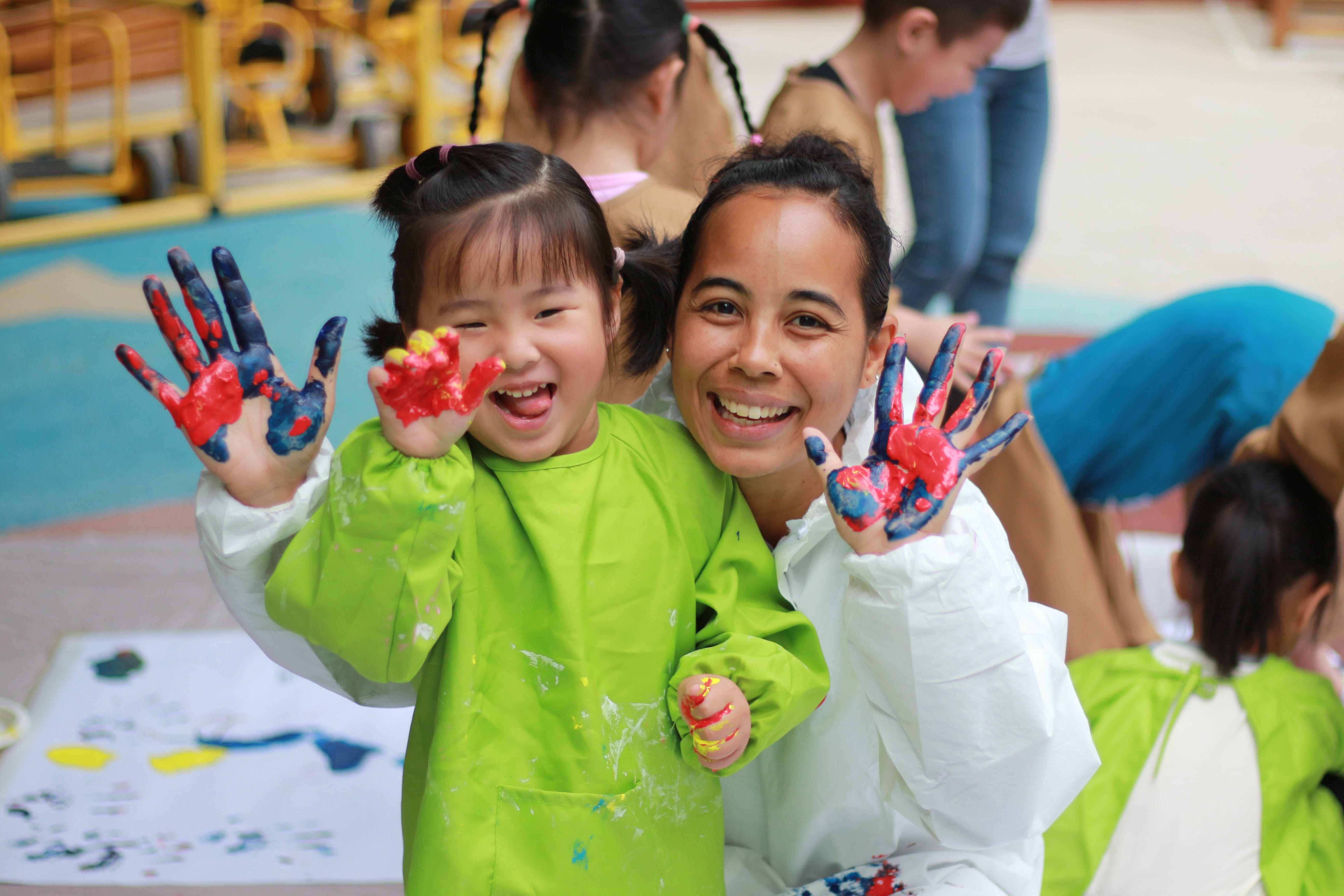
People knowing our EYFS education framework may aware that messy play is one of the key feature. What is messy play? How it help children's development? And what kind of form do messy play take? Let's follow the messy play activities at CrownDream Futian Campus and have a look!
熟悉我们冠萃EYFS教育体系的朋友们应该都知道,Messy Play(脏玩游戏)是其中的一个重要特色。那么什么是脏玩游戏?脏玩游戏对孩子的发展有什么帮助?脏玩活动都有哪些形式呢?让我们跟着冠萃碧海云天幼儿园的脏玩活动周,为您一一解答吧~
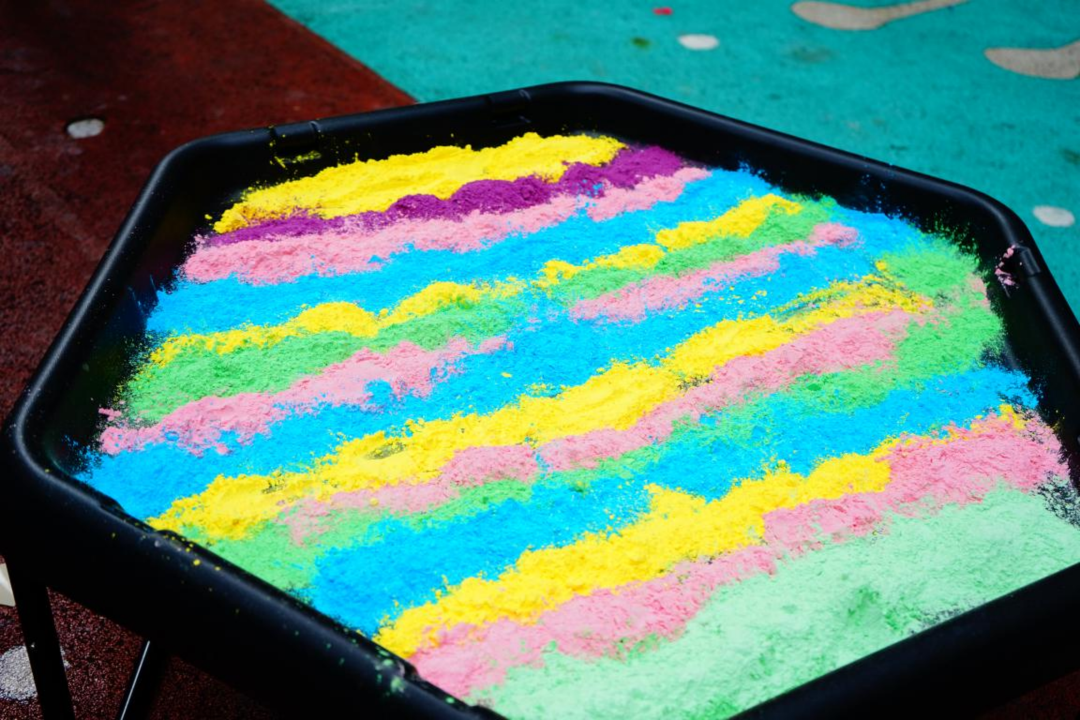
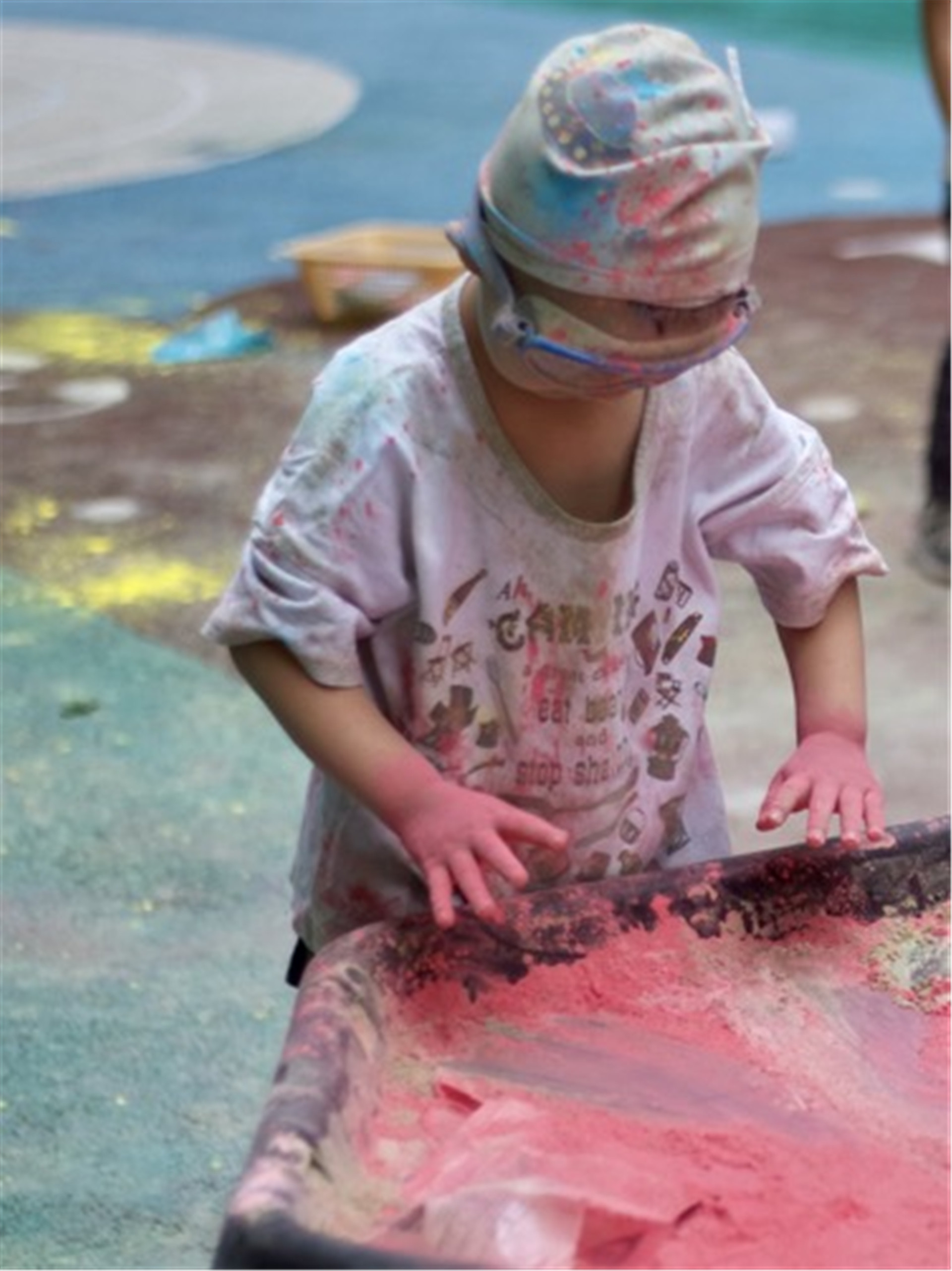
Look! One team is trying to casting the colorful powder, the other team tries to run away and dodge the barriers and learn to protect themselves.
看!彩色的粉末,一队的孩子们扬起手臂、奋力挥洒,另一队的孩子们全力躲闪,同时,注意躲避障碍物、学会保护自己。
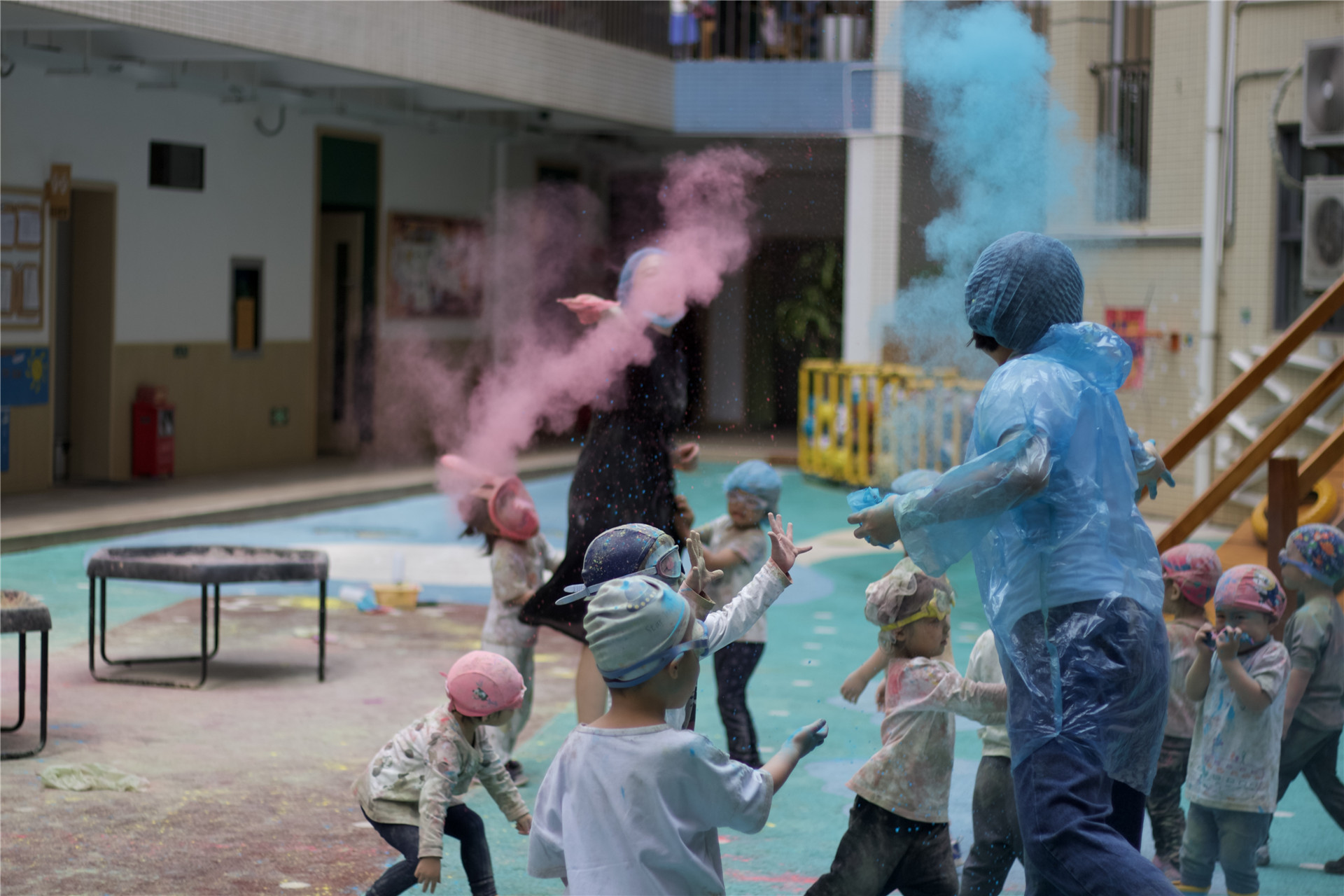
so why we design this activity?
那么为什么设计这个活动呢?
The children in this grade are at the age of 30-50 months, in terms of EYFS's seven developmental goals, these children's should reach some certain developmental goals in all areas. Through this activity's observation, the teacher can better knowing children's specific situation.
这个年级的孩子处于30-50个月的年龄,从EYFS七大领域发展目标来看,他们的各方面发展目标在这个阶段应该达到一定的标准,老师可以通过这个活动观察到孩子的具体情况。
For example, in the Physical Development (PD) area,children in this age should reach the goal: Runs skilfully and negotiates space successfully, adjusting speed or direction to avoid obstacles(30-50M PD - Moving & Handling). During the activity, teachers can determine if children are meeting this developmental goal by observing how well each child dodges the powder.
例如在身体发展(PD)领域,这个年龄段的孩子应该达到“在跑步时,能根据空间特点来调整速度和方向,并成功躲避障碍物”的目标(30-50M PD - Moving & Handling)。在活动中,老师们可以通过观察每个孩子在活动中躲避对方组扔来的彩粉的情况,来判断孩子是否达到这个发展目标。
In the Communication and Language Development (CL) area, teacher can observe whether the child understands the rules of the game and are able to follow directions (30-50M CL: Listening and attention). In addition, in the area of listening and attention, the concentration level shown by the child during the activity helps the teacher to better observe the child's development and to tailor the next steps according to the development shown by the child.
在交流与语言发展领域(CL)的理解方面,老师可以观察到孩子是否能理解游戏规则并回应活动中给出的简单的指令(30-50M CL-Listening and attention)。另外,在倾听与注意力方面,孩子在活动中展现出来的注意力集中度,也帮助老师更好的观察到孩子的发展情况,并根据孩子表现出来的的发展情况定制下一步计划。
This messy play also has a direct link to the child's creative development (Miller, 1999). In the Expressive arts and design (EAD) area, the developmental goals for children at this age include: Experiments with blocks, colours and marks (22-36M EAD: Exploring and using media and materials), and the use of colorful powders in the Colour Run certainly provided opportunities for children to learn and explore.
这种感官游戏还与孩子的创造力发展有着直接的联系(Miller, 1999)。在艺术表达和创造(EAD)方面,这个年龄的孩子的发展目标包含:探索颜色和记号(22-36M EAD: Exploring and using media and materials), 而彩跑活动中运用的各色彩跑粉,无疑是在为孩子提供学习和探索的机会。
messy
play
色彩探索
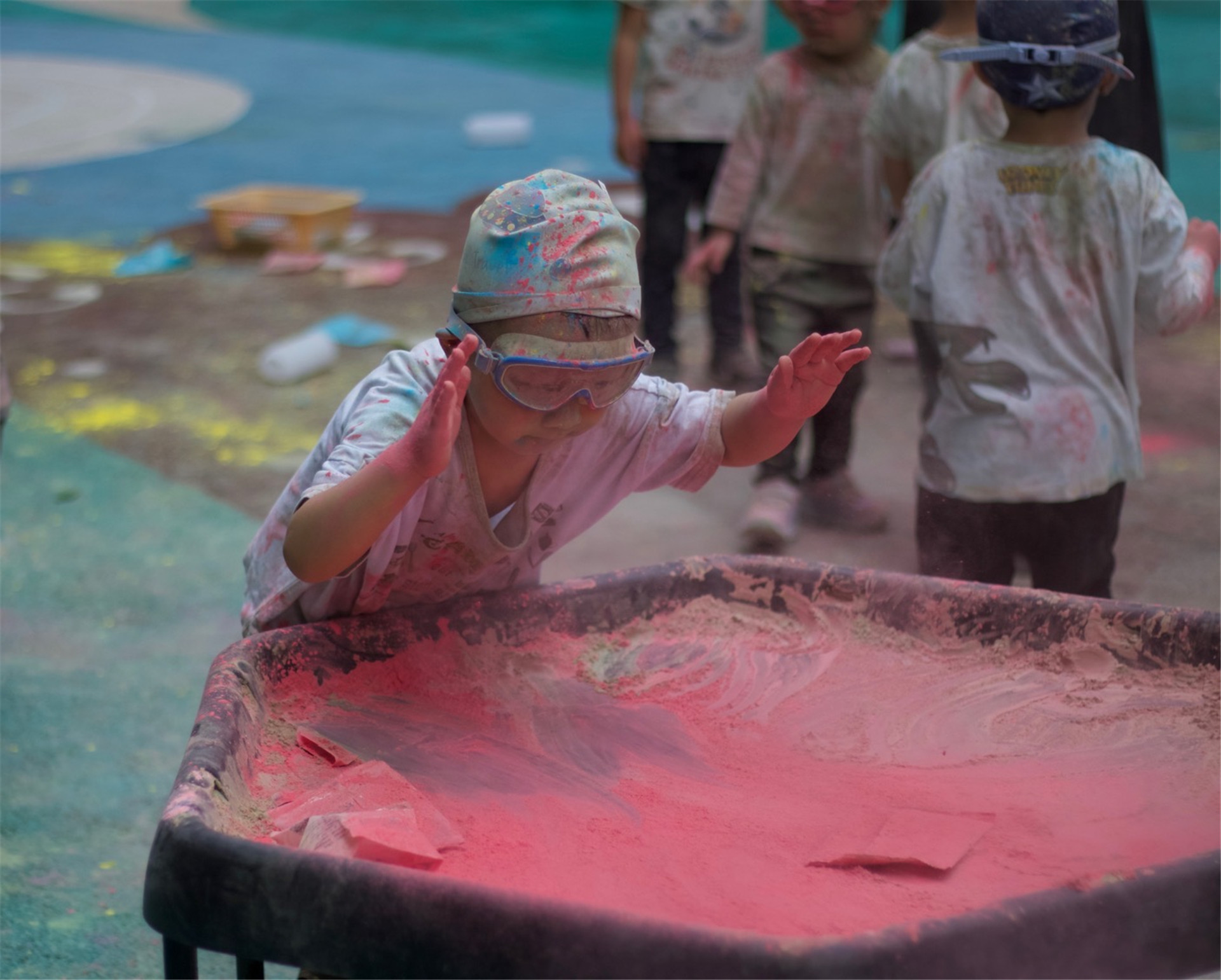
Wow! How's the colorful minibus? This is also one of activities during the Messy Play Festival. The K3 children are working together to paint it in different colours with brushe,and transform the minibus into Mondrian-style!
嘿,这辆彩色的汽车是怎么回事呢?原来这也是脏玩周的其中一项活动,K3的孩子们正在合作用刷子分别为它刷上不同的色彩,让它化身为蒙德里安风格的汽车呢!
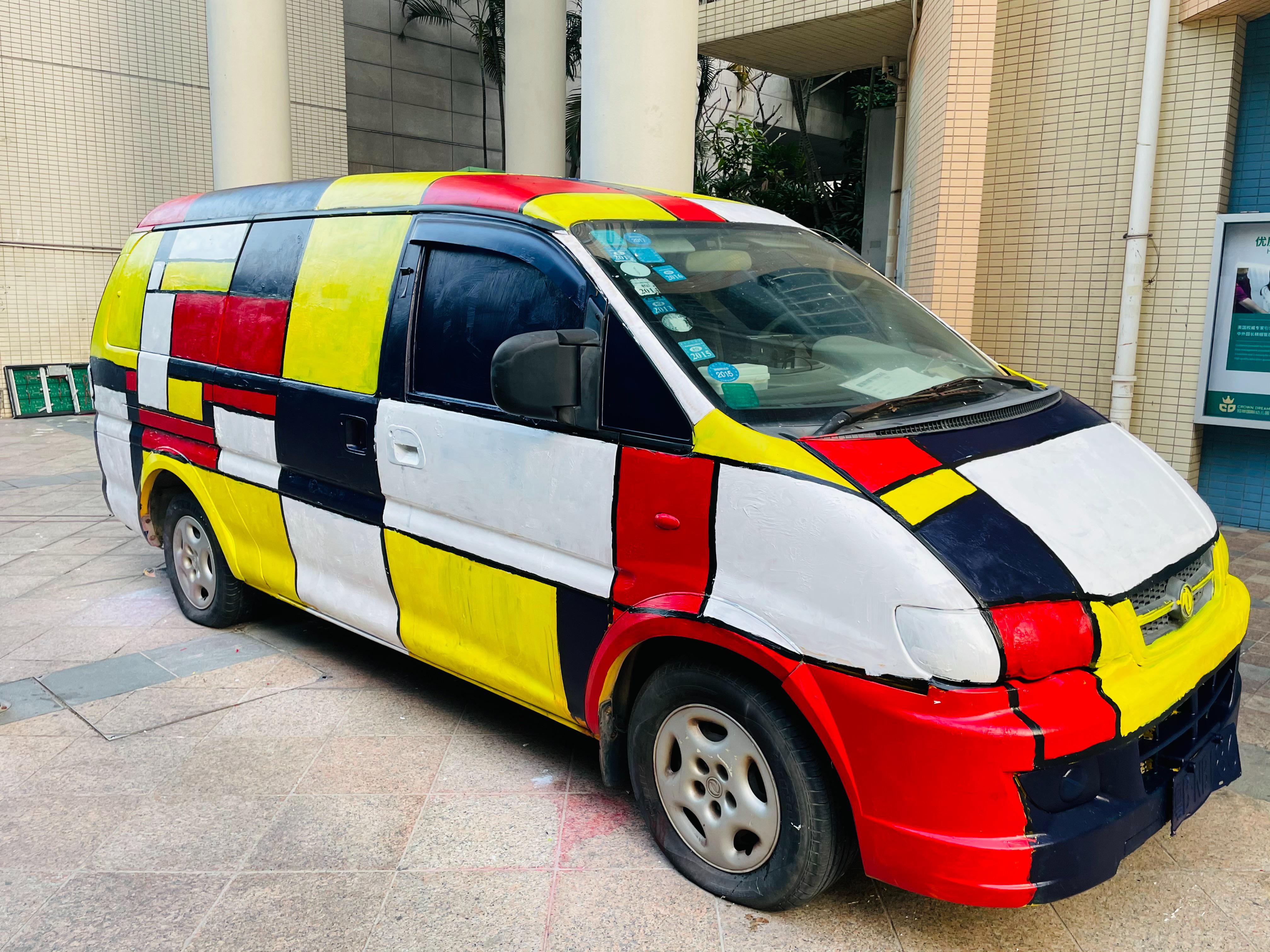
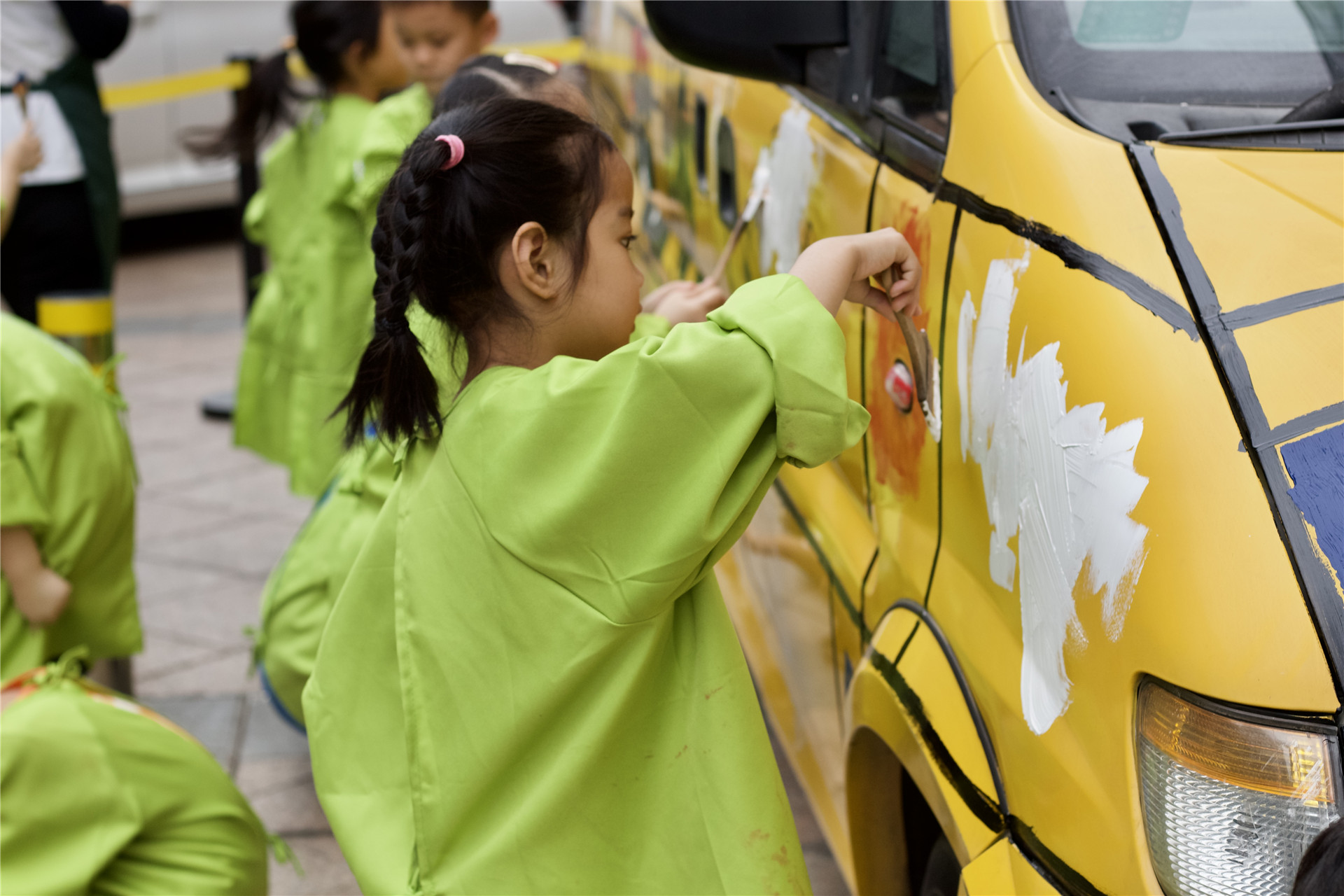
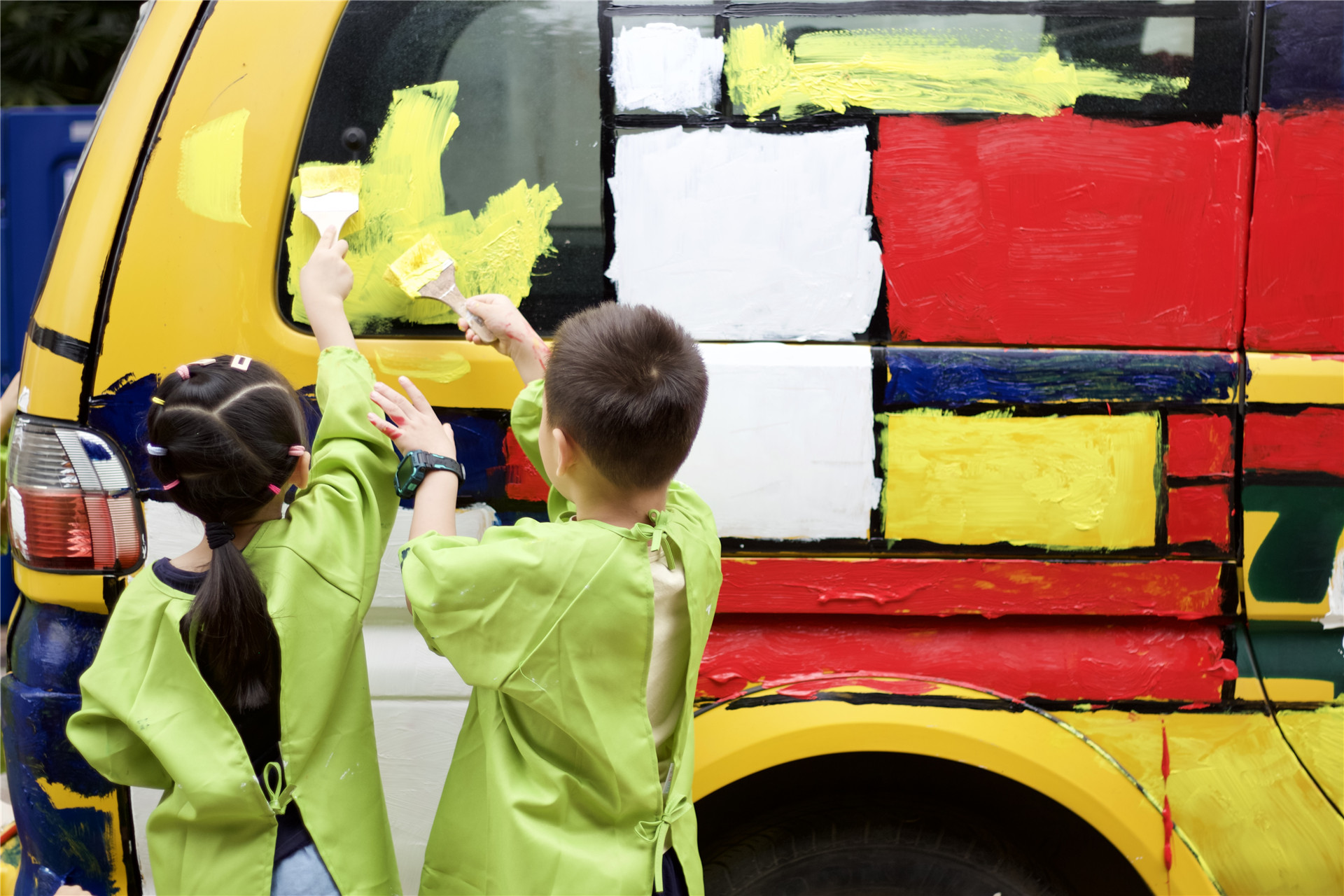
There are many clever ideas in this activity. Firstly, this activity focuses on developing children's Expressive arts and design (EAD) in exploring and using media and materials , and K3 (60-72 months) children can express their emotions or the scene in nature with rhythmic or simple dance movements (60-72M EAD: Exploring and using media and materials). The children were divided into colour groups of different colours, discuss the areas they in charge of and painting their own responsible color bolcks independently.
这个活动设计里可藏着许多帮助孩子发展的巧思呢。首先,这个活动着眼于培养孩子的艺术表达与创作(EAD),在探索和使用材料中,K3(60-72个月)的孩子在艺术活动中能与他人互相配合,也能独立表现(60-72M EAD: Exploring and using media and materials)。孩子们分成了不同色颜色组,商量着各自分工的区域,又独立的刷着自己负责的色块。
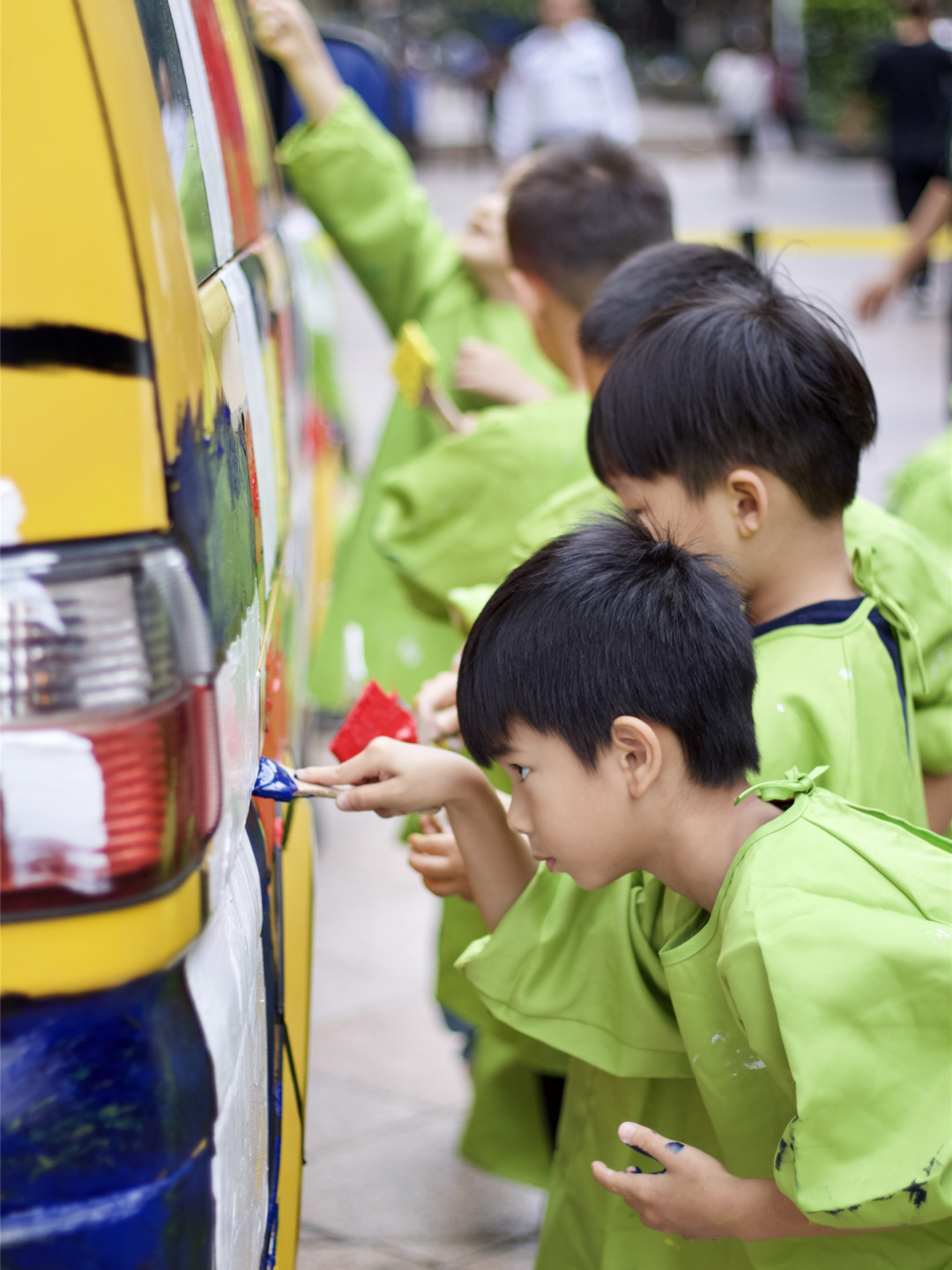
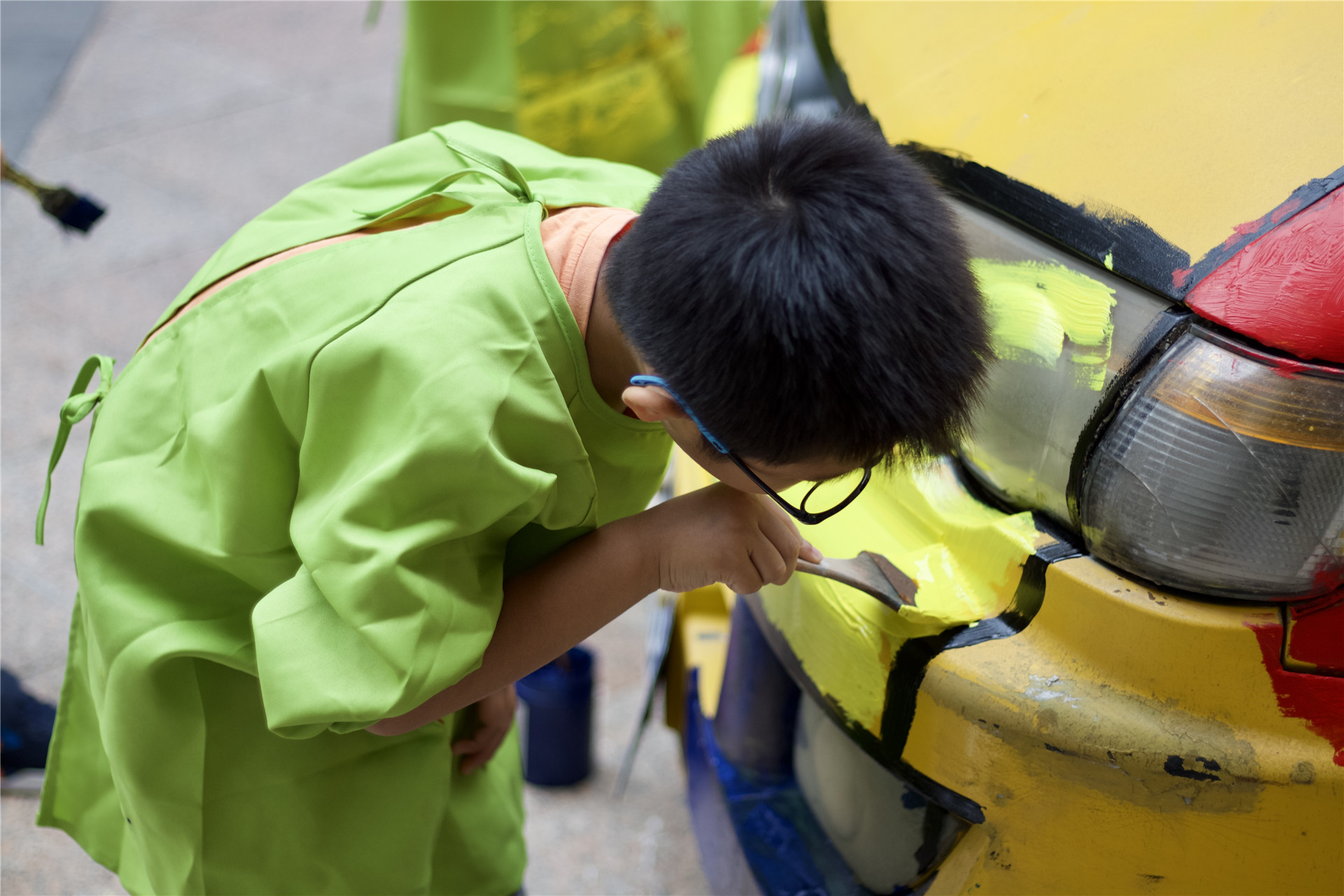
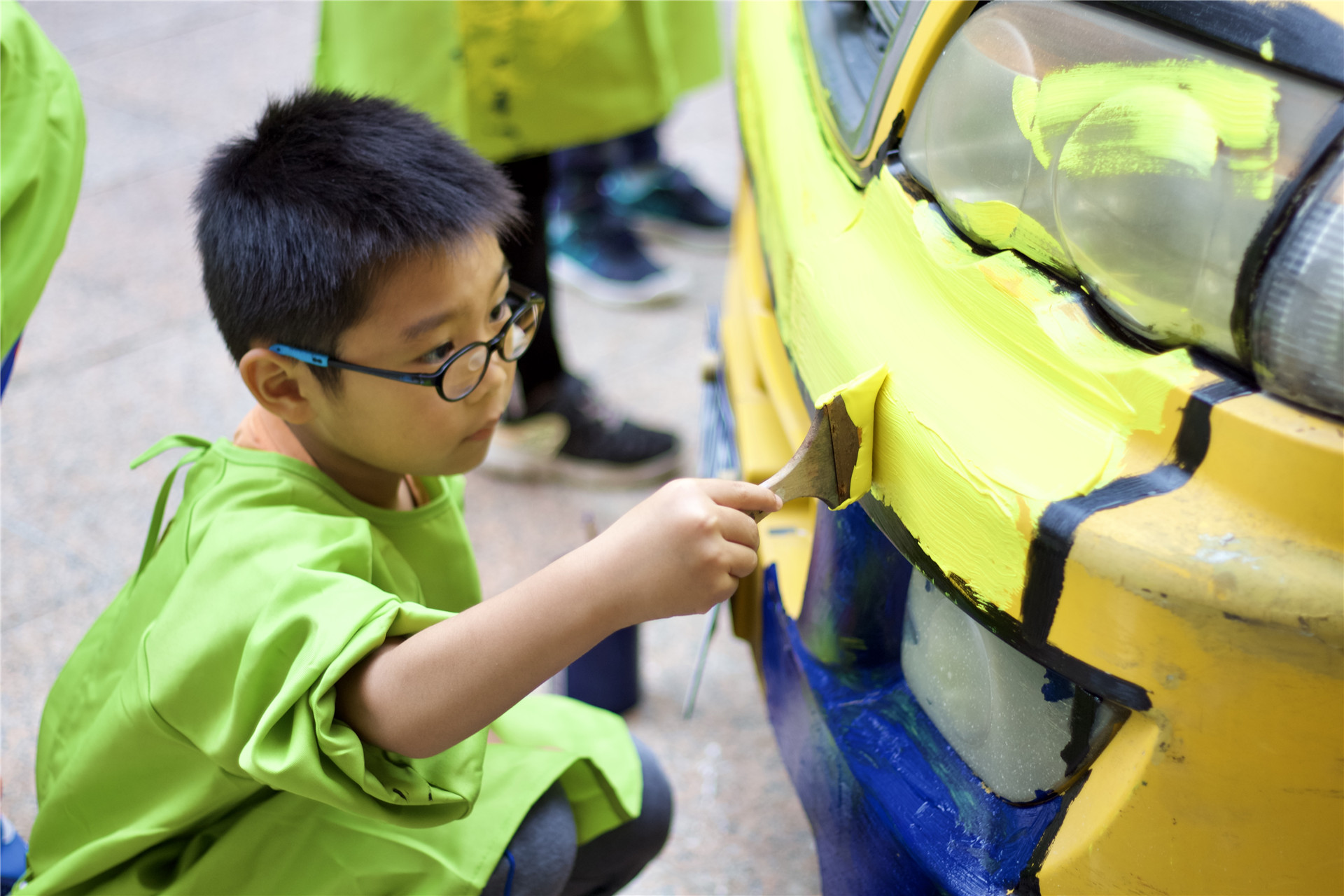
Meanwhile, this activity is also a way to raise children's aesthetic consciousness.During this activity, children were also exposed to the charm of Mondrian's art. Some studies have stated that focal colors such as red, blue, purple, yellow and green have more positive effects on young children's cognitive and sensory integration processing (Joh & Spivey, 2012). The colours we select in our activities are actually designed to stimulate children's develop.
同时,这个活动也是对孩子的审美培养,在活动中也让孩子感受到了蒙德里安艺术的魅力。有研究表明红色,蓝色,紫色,黄色,绿色等焦点色会对幼儿的认知和感官整合处理产生更多的积极影响(Joh&Spivey, 2012)。我们在活动中所挑选的颜色,其实也是为了刺激孩子的发展。
In the Physical Development (PD) area, this activity also let children manipulate the brush with one hand, brushing the different color blocks, and being careful not to brush the paint onto other blocks, which is also a fine motor training.
在身体发展方面(PD),这个活动也让孩子们有充分的机会单手操作刷子,仔细的刷着不同的色块,小心翼翼的不让颜料刷到其他色块,这也是一种精细动作的锻炼。
Besides, in this acativity, we also have extra gain-Unserstand World (UW). When the paint tipped over, curious children use the brush to mix different colors together and were surprised to find that it come into a new color . As Duffy (2007) emphasised the meaning of messy play, children are able to discover connections between different things through these messy play activities and construct their own cognitive systems.
不仅如此,在这个活动中,还有其他的收获--理解世界(UW)。在颜料翻倒时,好奇的孩子们用刷子把不同的颜色混到了一起,惊喜的发现混合出了一种新的颜色。正如Duffy(2007)所解释的脏玩游戏的意义,孩子们通过这些活动,能够发现事物之间的不同和关联,从而主动地建构自己的认知体系。
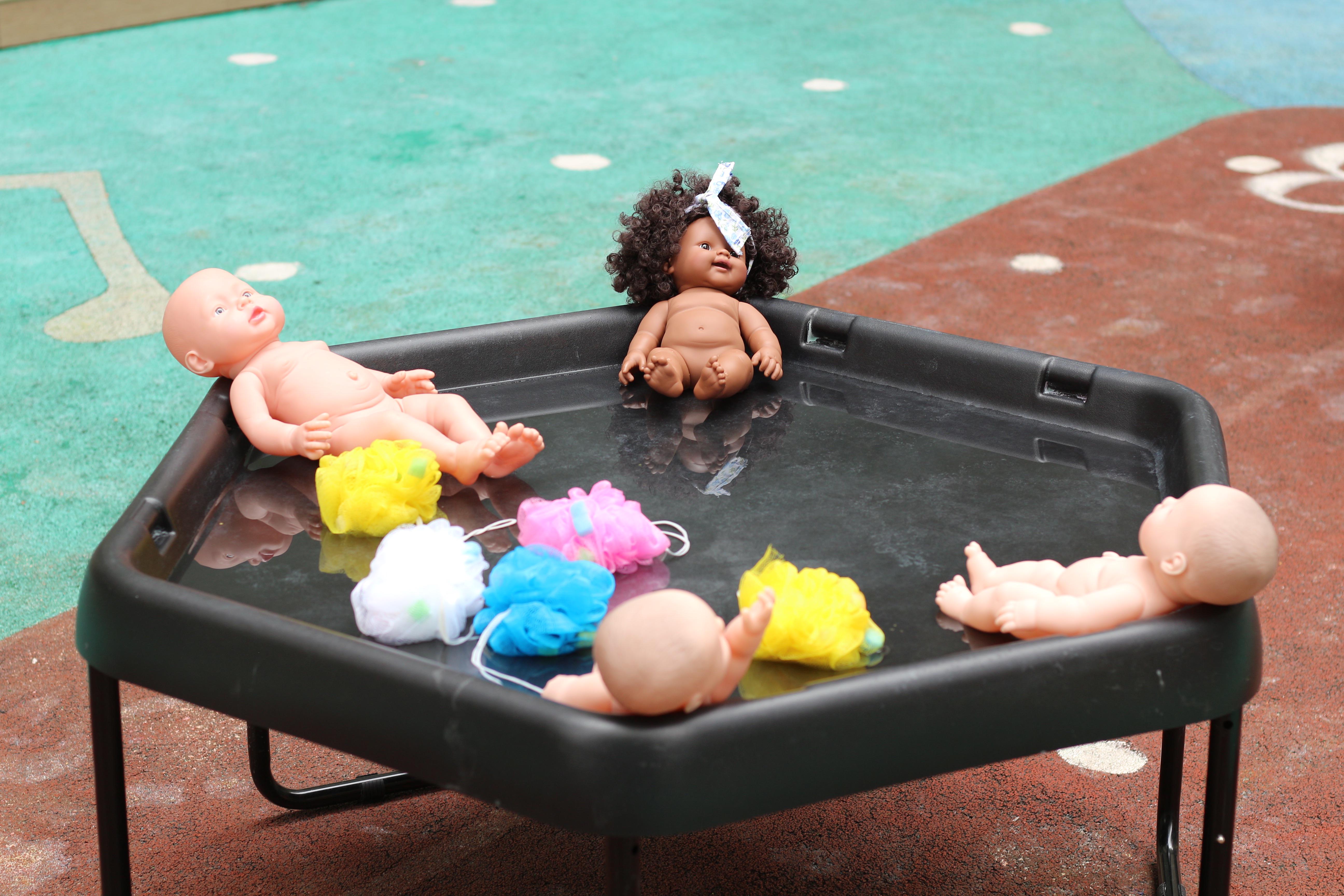
Why is there a taff tray in the playground? Let's find out!
诶,操场上怎么多了一张感官盘,感官盘在这里是用来做什么的呢 ?让我们一起来一探究竟吧!
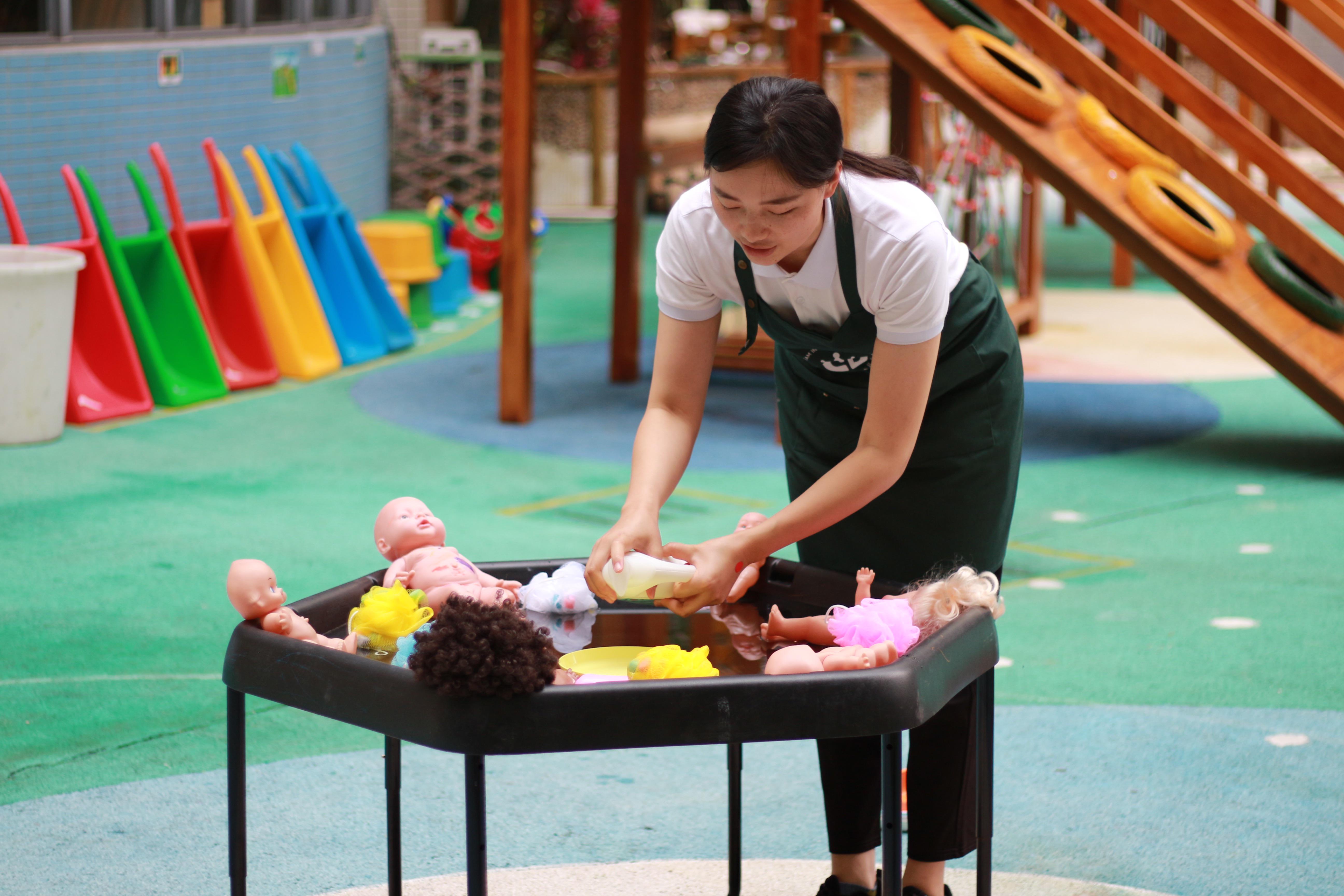
The PN children are learning to bathe and care for the little baby. Look! The children are freely exploreing and learning. So what developmental goals for this year group have been matched here?
原来是PN班的孩子们要学习给小宝宝洗澡,照顾小宝宝们呢。看,孩子们开始自由的探索和学习了。那么在这里,又匹配了哪些这个年龄段的发展目标呢?
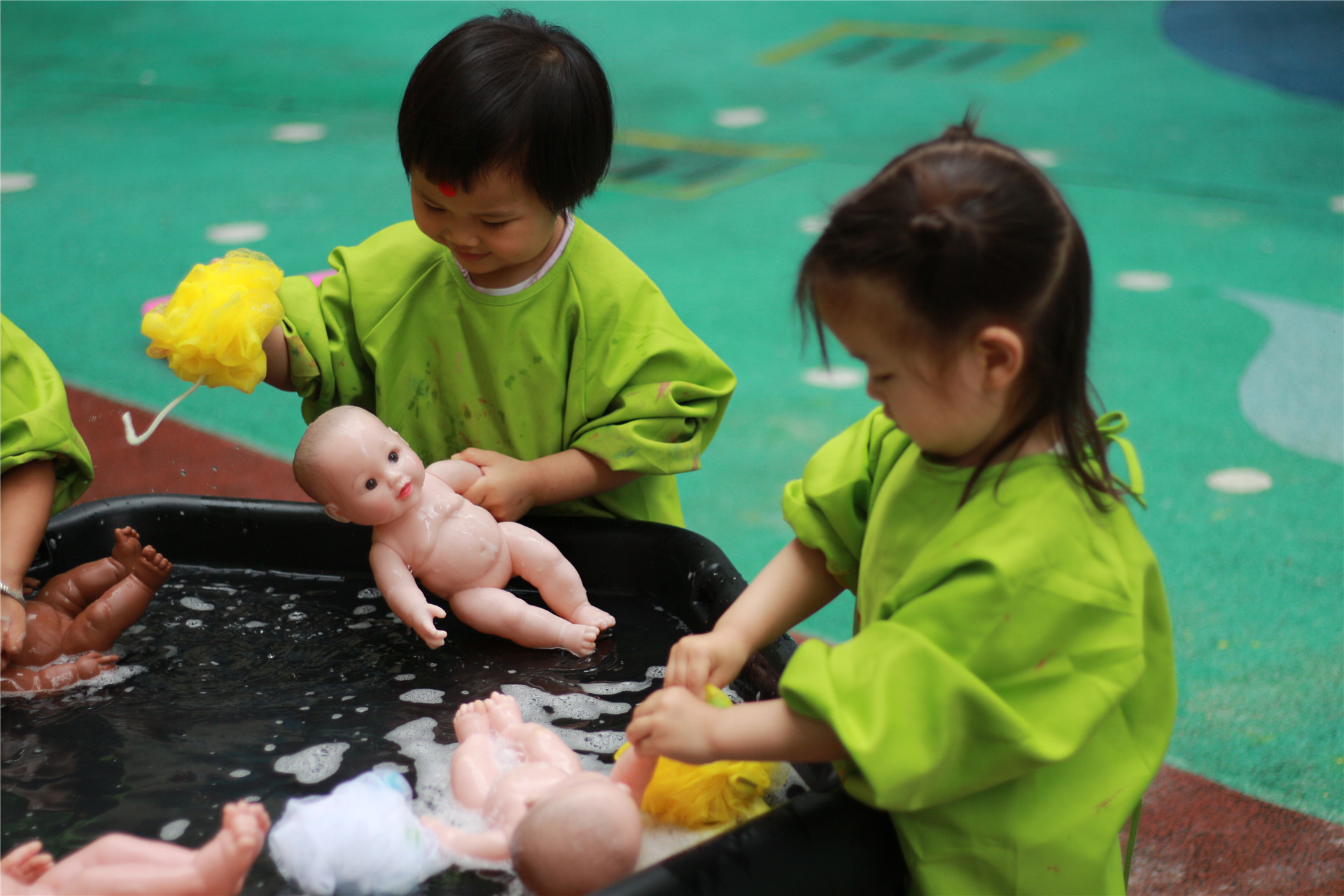
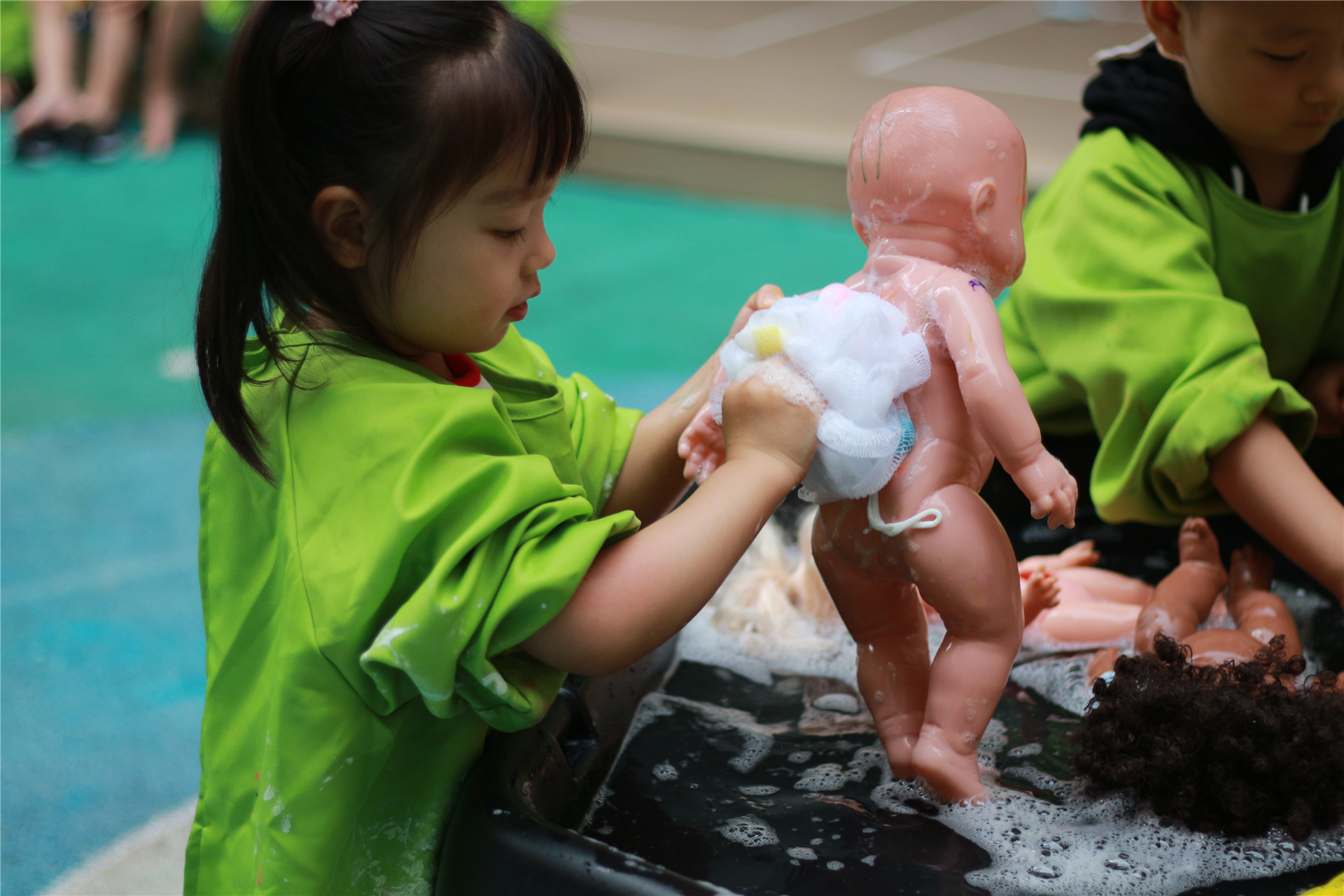
Firstly, in the Physical Development (PD) area, the children use bath balls to clean and wipe their little babies. In this activity, they manipulate these tools with one hand (30-50M PD: Moving & Handling). In the Communication and Language (CL) area, the children understand and able to follow the teacher's instructions (30-50M CL: Listening and attention) and have a strong willingness to explore (0-11M CL: Listening and attention) after listening to teacher's demonstrations and instructions.
首先在身体发展(PD)方面,孩子们用沐浴球给小宝宝进行清洁和擦拭,能单手操作这些工具(30-50M PD: Moving & Handling)。同时,在交流与语言发展领域(CL)方面,孩子们听完老师的示范和指导后,能理解和听从老师的指令(30-50M CL: Listening and attention)并且有强烈的探索意愿(0-11M CL: Listening and attention)。
In Personal, Social and Emotional Development (PSED), children freely select combs and bath balls from the taff tray to groom their little babies. They are able to (20-50M PSED: Self-confidence and self-awareness). Can select and use activities and resources with help.
在个人、社会性和情绪发展(PSED)方面,孩子们自行挑选感官盘中的梳子,沐浴球,来给小宝宝梳洗,能够选择、 参与和使用材料(20-50M PSED:Self-confidence and self-awareness)。
In Maths (M) area, children understand the teacher's words 'one person with one baby', 'four people per table' and know how to express the number of things in a group using numbers (30-50M M: Numbers).
在数学(M)方面,孩子们能够理解老师说的“一人拿一个”,“每张桌子4个人”,知道用数字来表示一组事物的数量(30-50M M: Numbers)。
In the Expressive arts and design (EAD) area, children are playing the role of caregiver, engages in imaginative role-play based on own first-hand experience (30-50M EAD:Being imaginative). Besides, during the activity, children are able to use simple tools and techniques competently and appropriately (40-60M EAD:Exploring and using media and materials).
在艺术表达和创造(EAD)方面,孩子们扮演着照顾人的角色,参与到和自身经验有关的角色扮演游戏中(30-50M EAD:Being imaginative),并且通过操作材料,以达到预期效果(40-60M EAD:Exploring and using media and materials)。并且在活动中,孩子们能够恰当的使用沐浴球,梳子和沐浴露,达到能自如且恰当地使用简单的工具和操作技巧(40-60M EAD:Exploring and using media and materials)。
In addition, children can learn by observing the behaviour of others during the activity.
此外,孩子们还能在活动中通过观察别人的行为来学习。
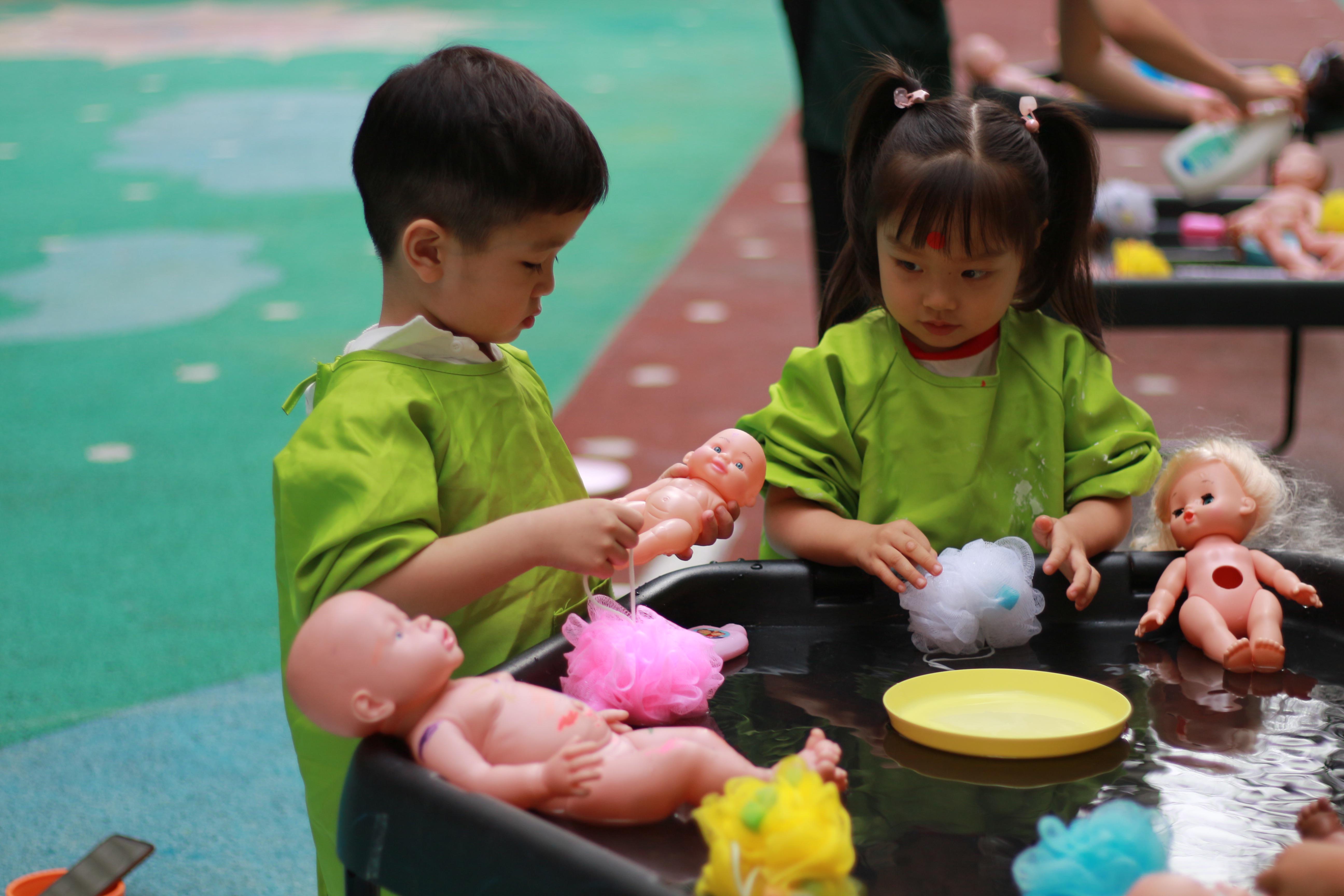
△ “让我看看别的小朋友是怎么做的”
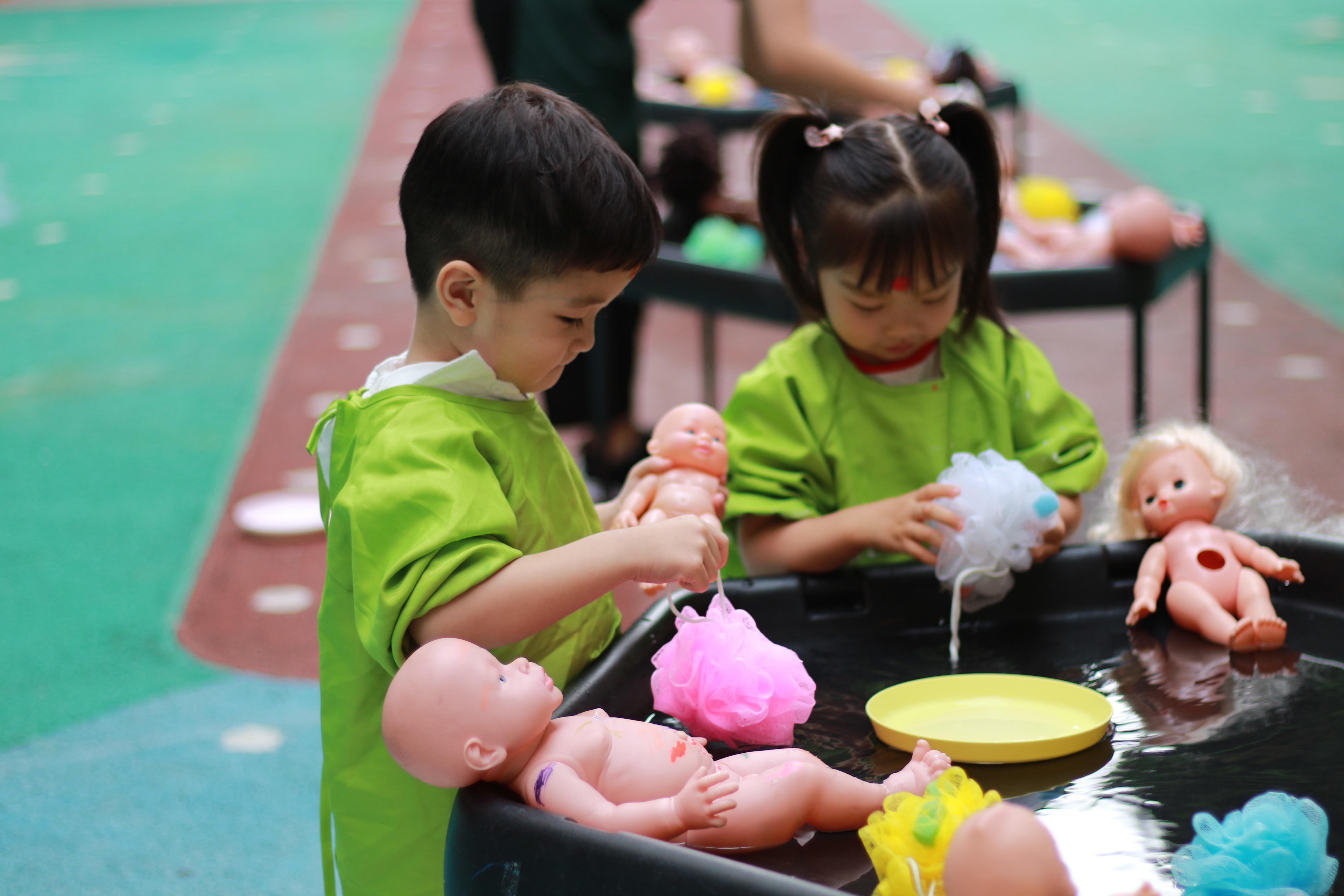
△ “我也学会了!开始自己动手啦!”
With these activities illustrated above, do you got the idea of the different EYFS development goals in each year groups linked to children's messy play? Let's take a look at some of the other exciting activities below and guess the developmental goals!
通过以上的几个活动,大家是不是已经对孩子们的脏玩游戏所链接的EYFS不同年龄段的发展有了一定的概念呢?下面让我们再看看看其他的精彩活动,并猜猜这些活动所对应的该年龄的发展目标吧!
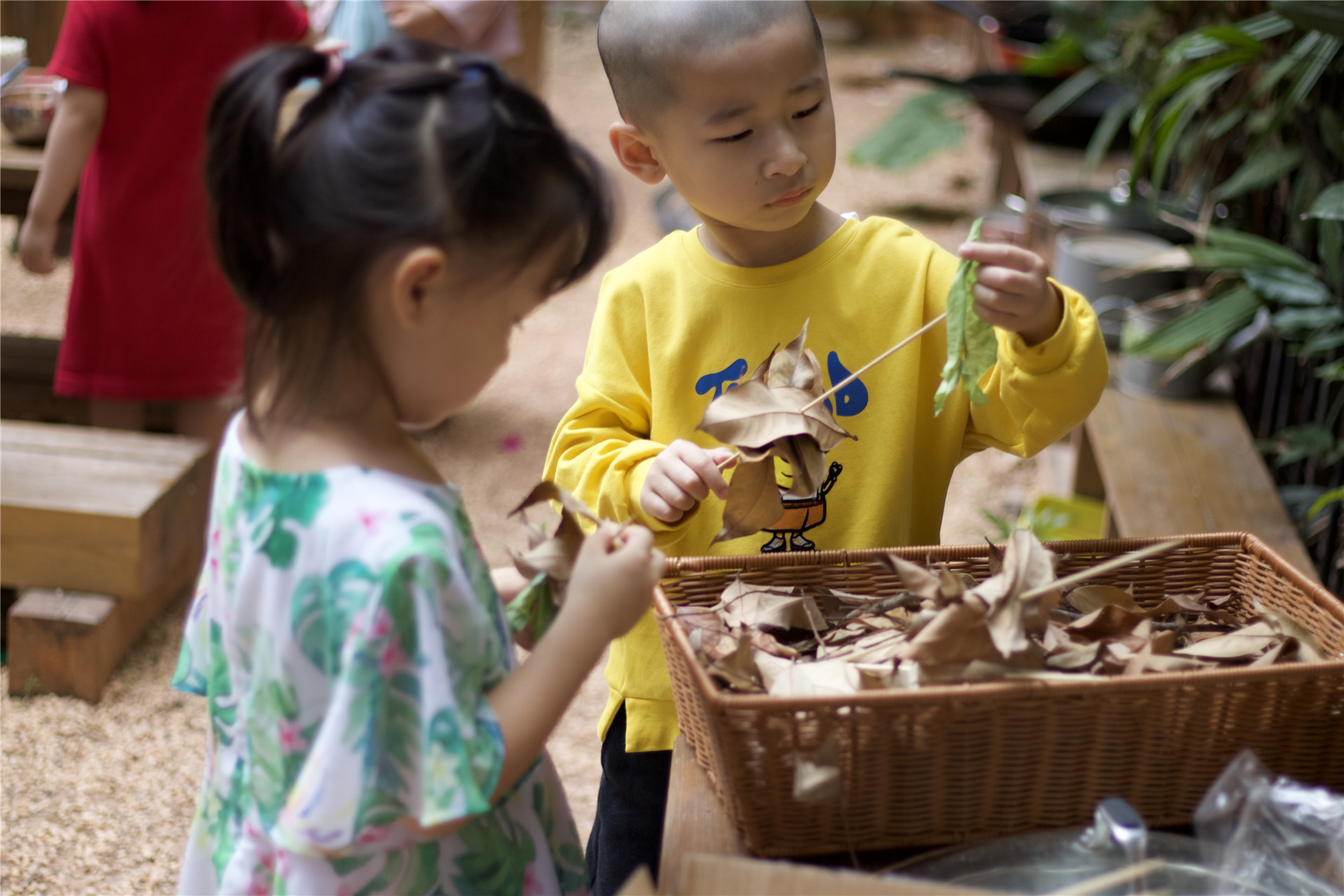
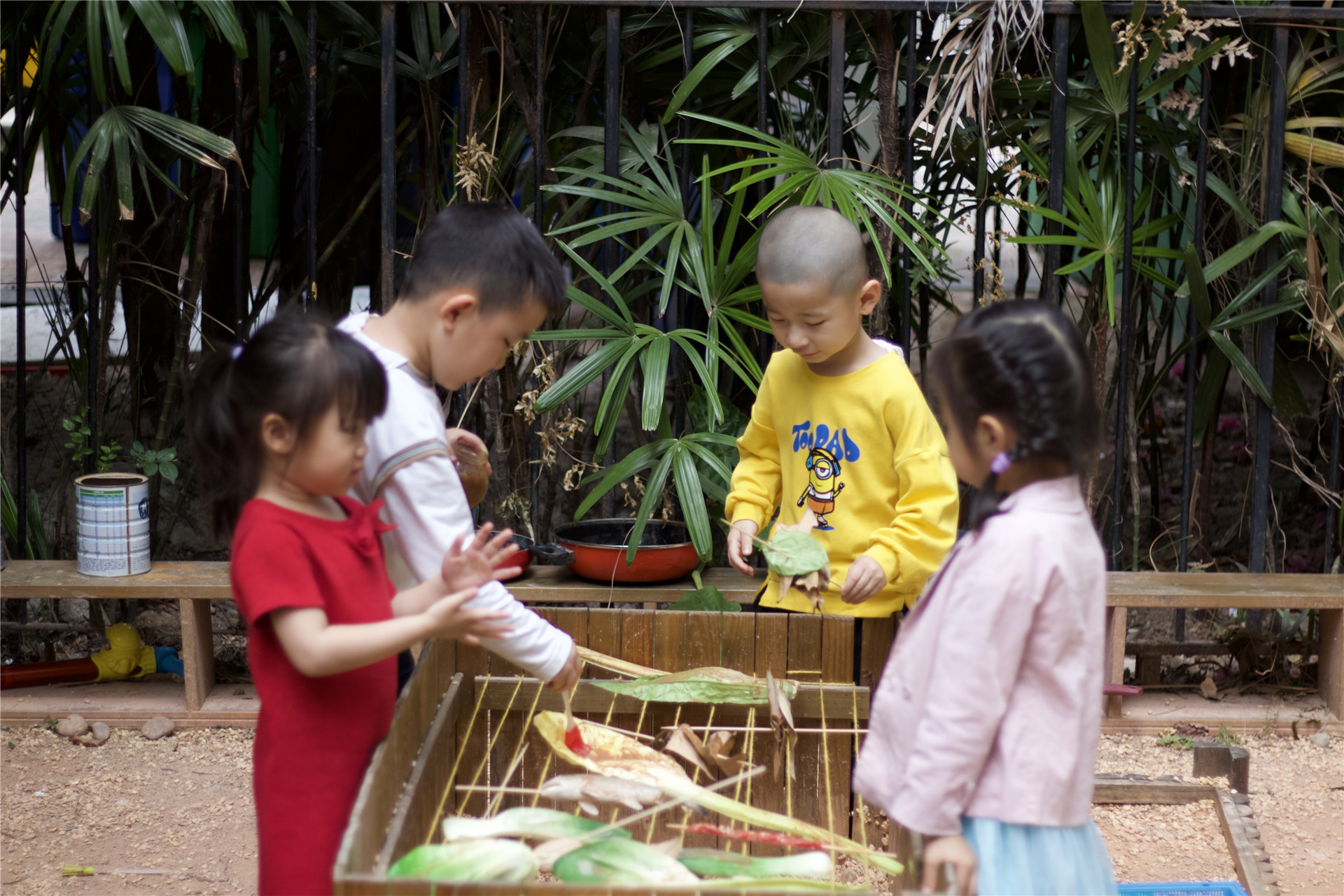
△ 孩子们用竹签串起树叶,青菜等其他材料,做成烤串
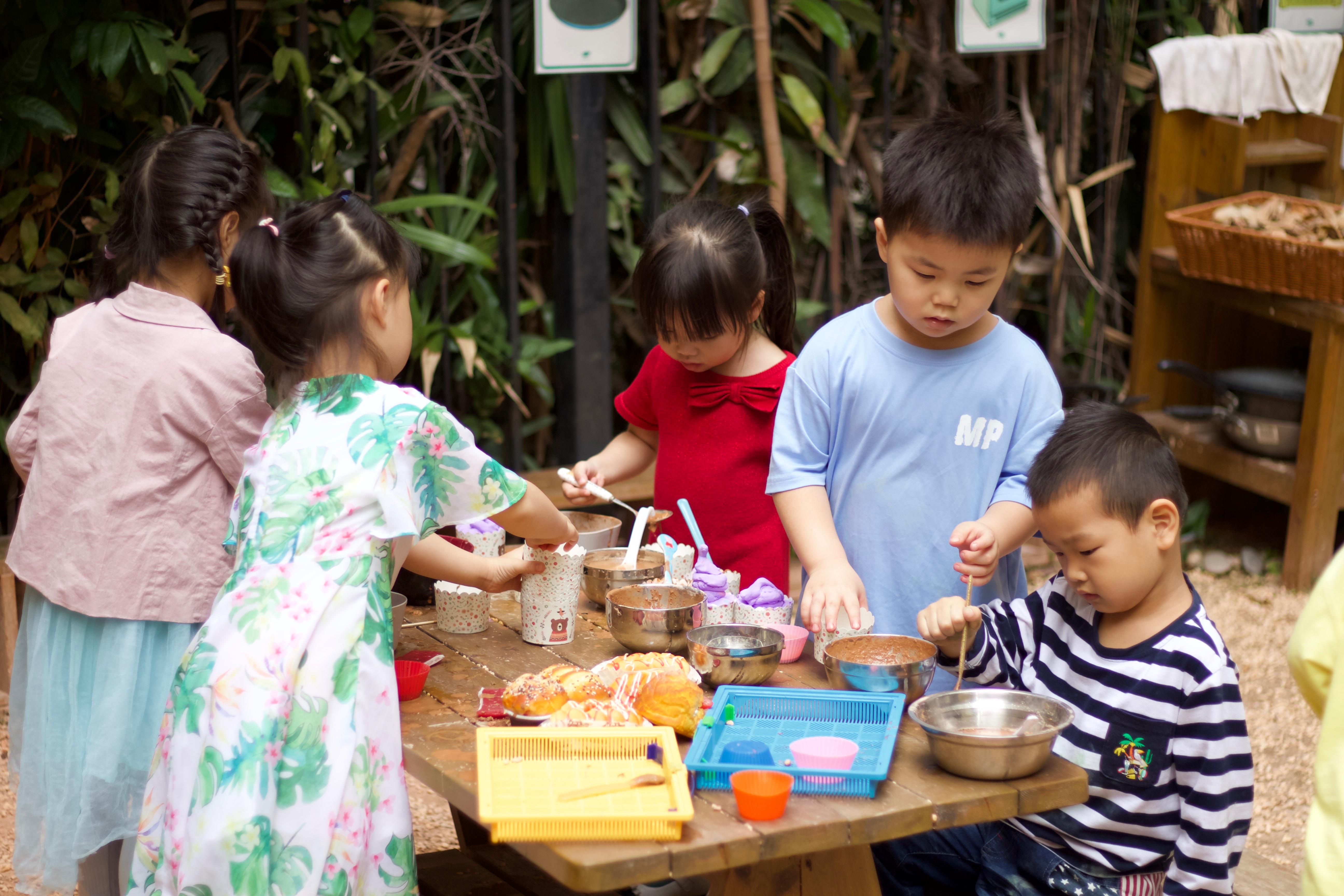
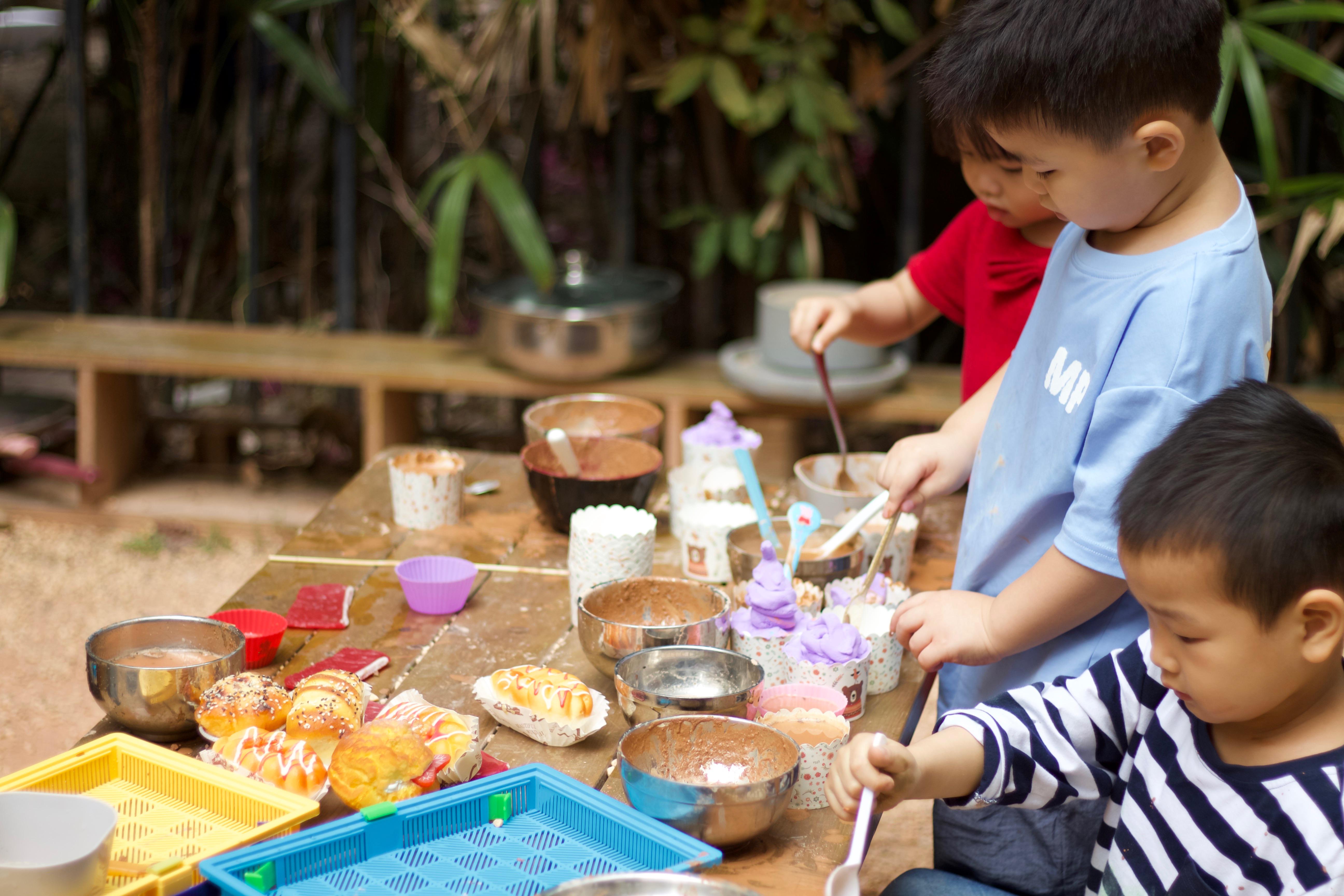
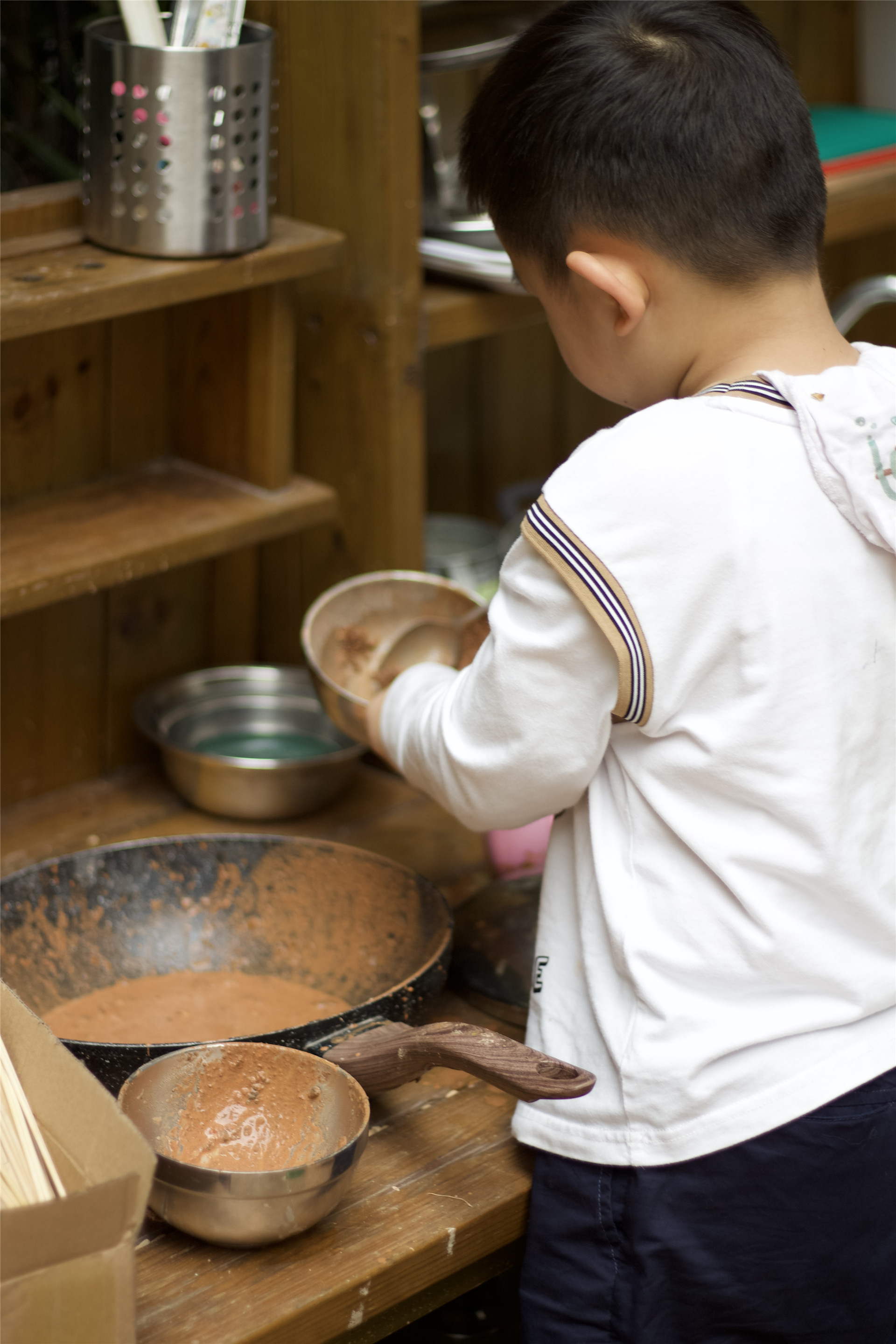
△ 孩子们用泥巴厨房里的素材做蛋糕
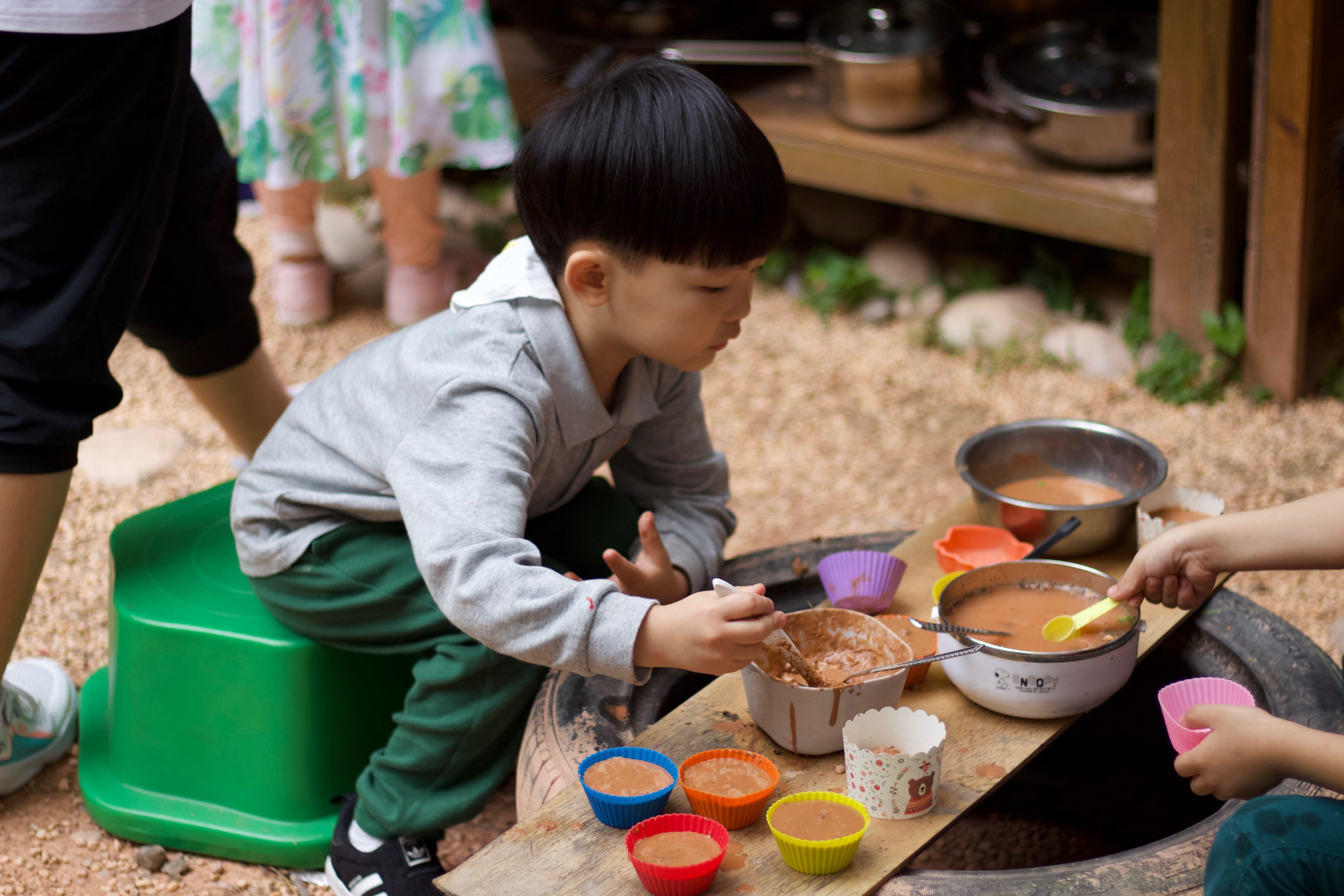
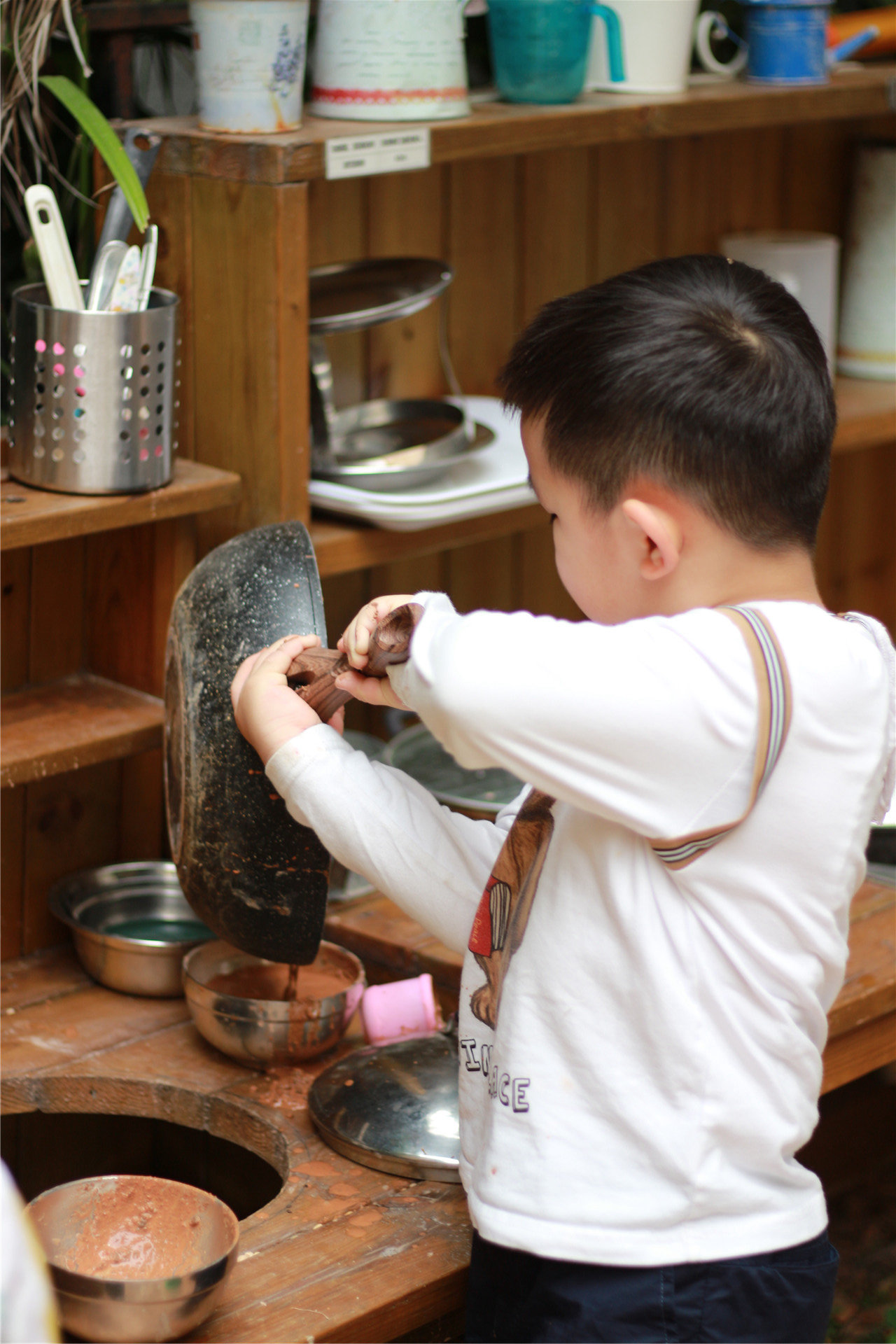
△ 泥巴厨房里的盛宴
dodge the foam 躲避胡须泡泡
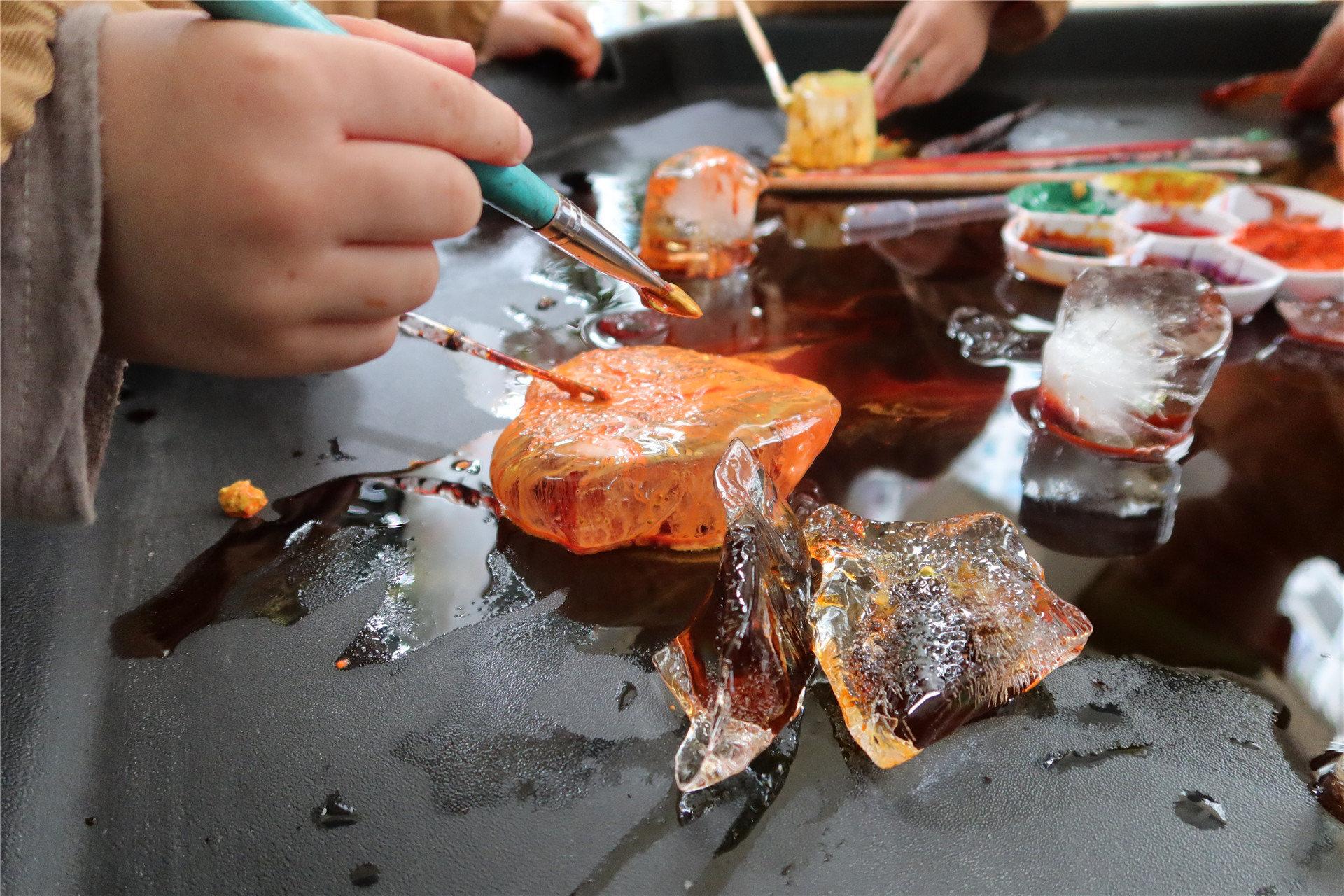
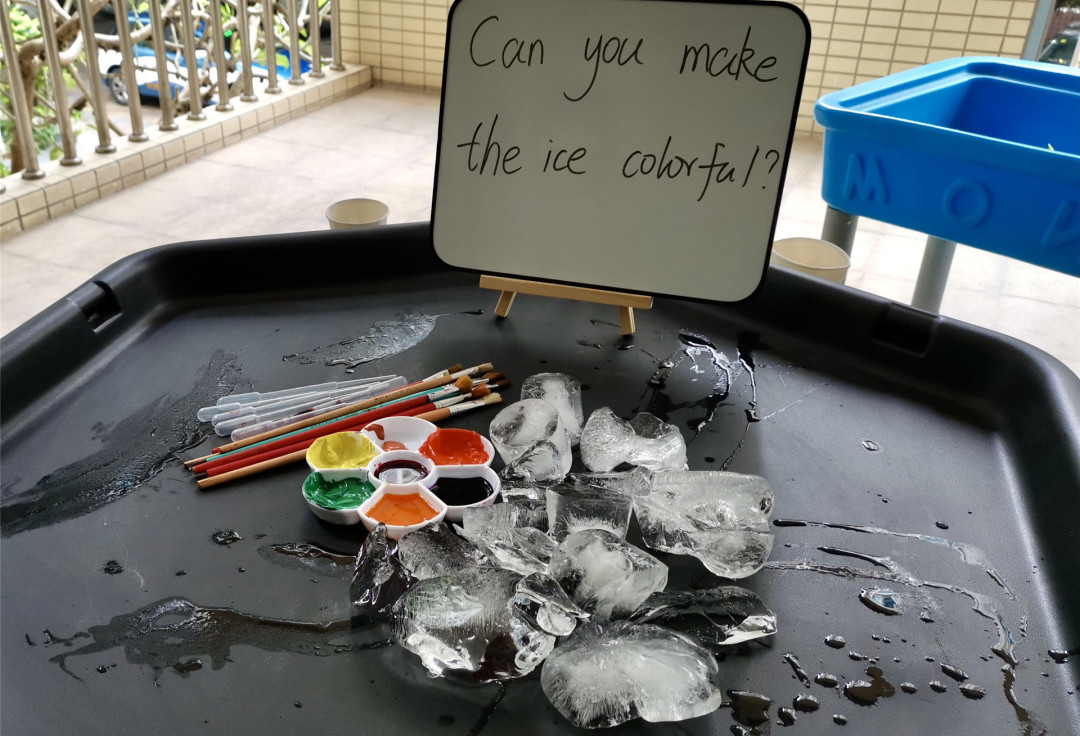
coloura the ice 冰块涂色

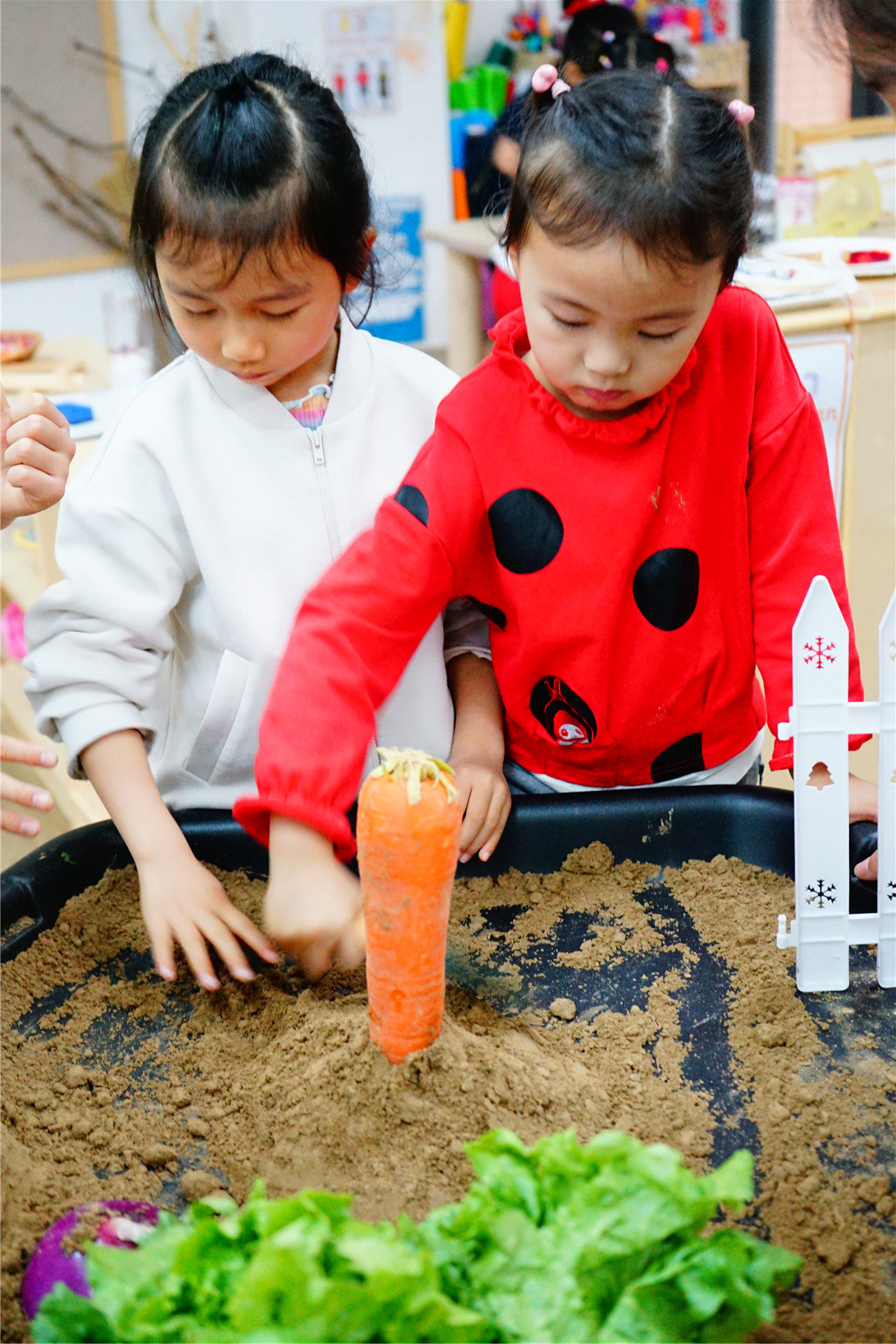
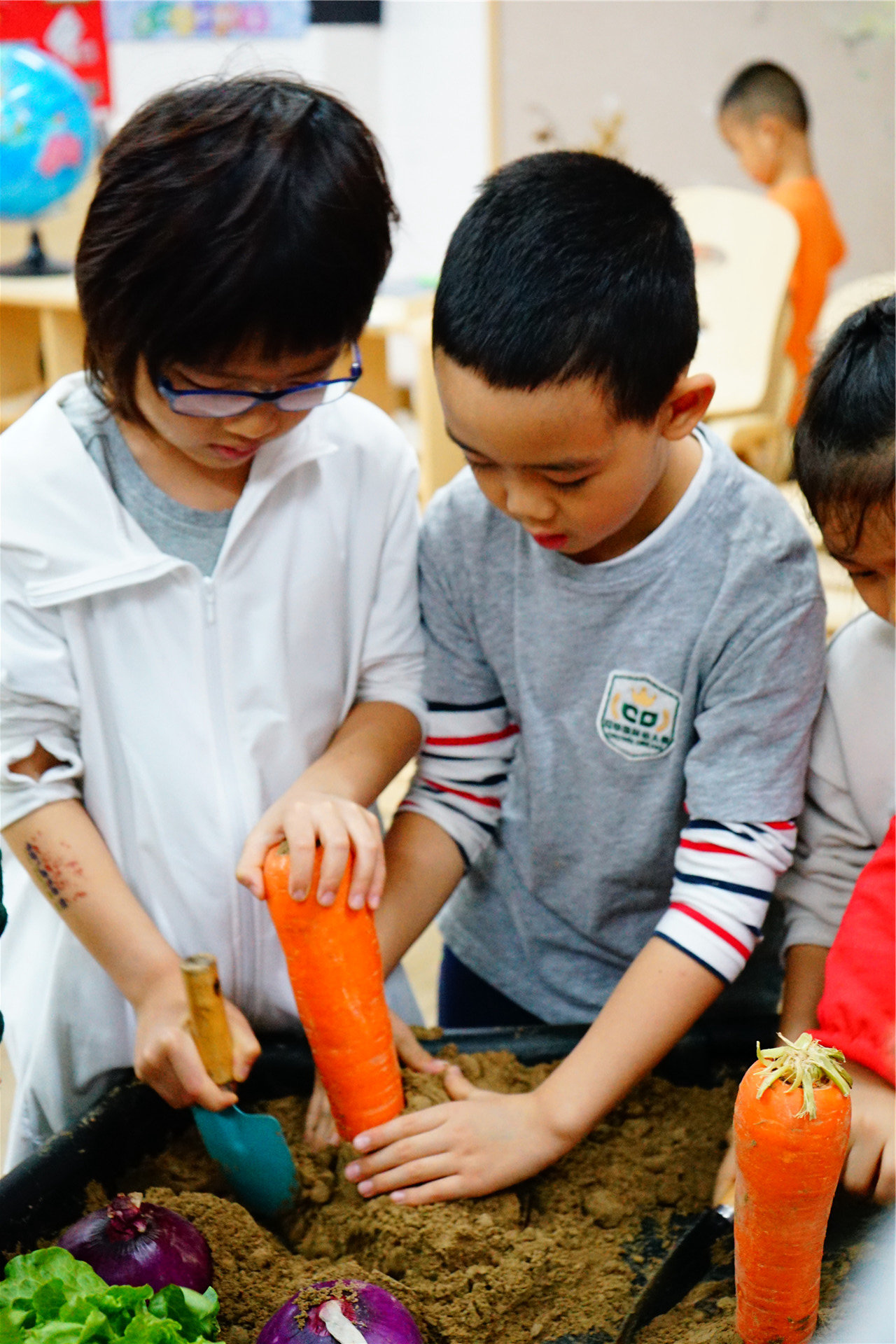
grow vegetables 种植蔬菜
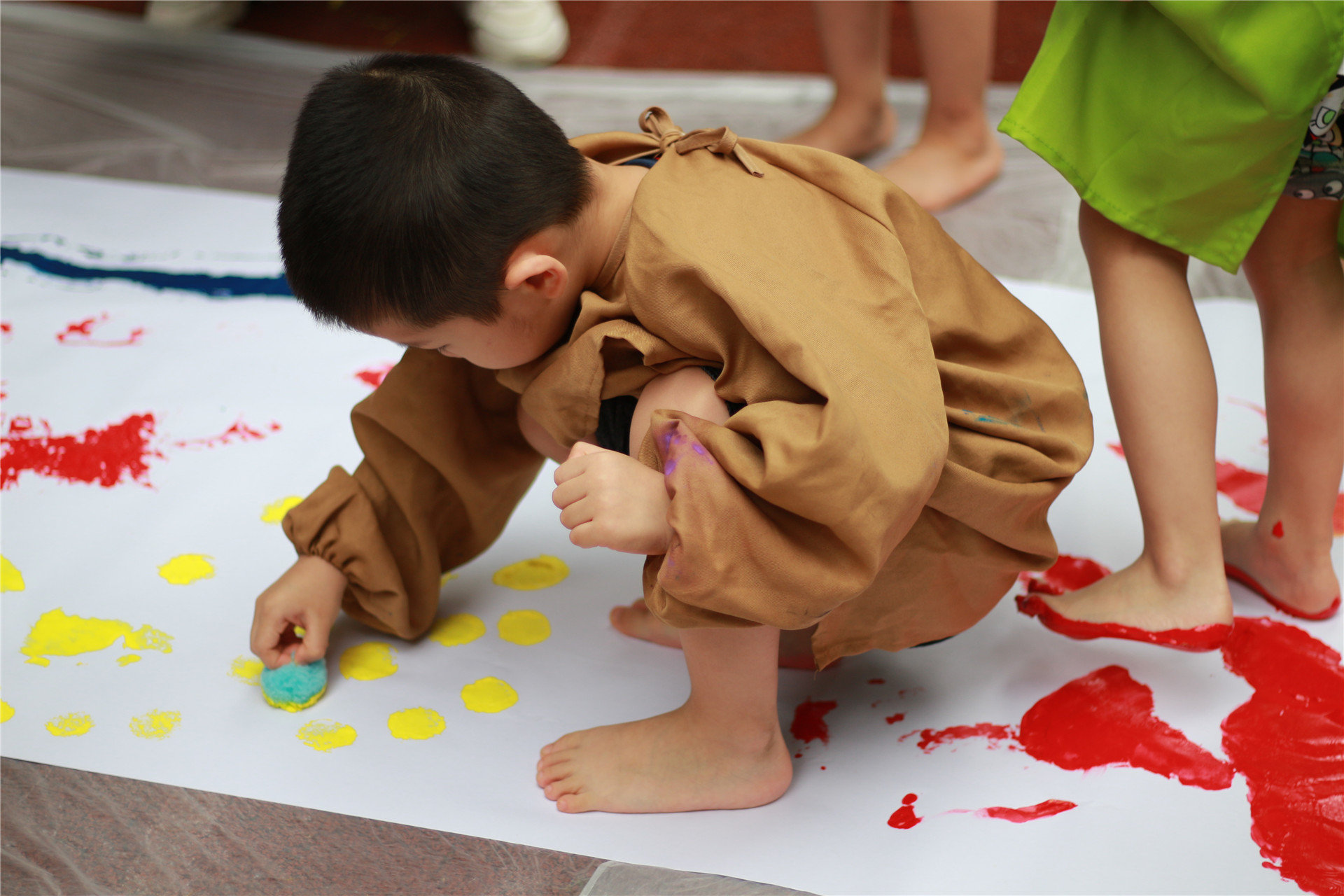
messy painting 彩绘活动
Crocodile Pool Adventure 鳄鱼池探险
beautiful butterfly 蝴蝶飞飞
water bomb 疯狂“水炸弹”
conclusion 结语
Despite appearances, researches show that messy play can make an enormous contribution to babies' and young children's cognitive and creative development (Duffy, 2007). Children are being creative when they use materials in new ways, combine previously unconnected materials and make discoveries that are new to them, and messy play enables children to do all these things .
尽管表面上看,脏玩游戏会带来“一片狼藉”,但是已有研究表明,它可以对婴幼儿的认知和创造性发展做出巨大贡献(Duffy, 2007)。脏玩游戏强调主动探索材料及其特性的游戏,成人给幼儿准备各种丰富的材料,不局限玩法和步骤,让孩子们自由自在地玩耍,通过与各种材料的接触、感知和互动,发现事物之间的不同和关联,发挥自己的想象力,从而主动地建构自己的认知体系。同时,当儿童以新的方式使用材料,将以前没有联系的材料结合起来,并有新的发现时,他们就逐步在培养着创造力(Duffy, 2007)。
To sum up, messy play have considerable benefits to children's development. Clothes and shoes can be washed when they get dirty, but childhood only comes once. Don't lose the good chance to develop! Children are washable!
所以说,脏玩游戏对孩子发展的益处颇多,衣服鞋子脏了可以洗,但童年只有一次,成长与发展的机会不容错过!Children are Washable!

Reference
Duffy, B. (2007). All about… messy play. The Early Years Foundation Stage Primary National Strategy.
Gascoyne, S. (2017). Patterns and attributes in vulnerable children’s messy play. European Early Childhood Education Research Journal, 25(2), 272-291.
Gascoyne, S. (2019). What children learn from messy play. Early Years Educator, 21(7), 38-44.
Miller, K. (1999). Simple Steps: Developmental Activities for Infants, Toddlers, and Two-Year-Olds. Beltsville, MD: Gryphon House.
Joh, A. S., & Spivey, L. A. (2012). Colorful success: Preschoolers’ use of perceptual color cues to solve a spatial reasoning problem. Journal of Experimental Child Psychology, 113(4), 523-534.
Smith, D., & J. Goldhaber. (2004). Poking, Pinching and Pretending: Documenting Toddlers' Explorations with Clay. Saint Paul, MN: Redleaf.
END
文章推荐
 :
 :hello@crowndream.cn


